Most sensitive-skin advice stops at “avoid fragrance,” which is true but nowhere near the whole story. A product can be fragrance-free and still sting. It can say “for sensitive skin” on the front and carry three known irritants on the back. The label is marketing copy; the ingredient list is the actual information — you just have to know what you’re reading.
What “Sensitive Skin” Actually Means
Dermatologists generally split reactive skin into two overlapping categories: a genuinely compromised barrier (skin that stings from almost everything because moisture is escaping and irritants are getting in more easily) and a reactivity pattern tied to a diagnosed condition like rosacea, eczema, or contact dermatitis. The everyday version most people mean — skin that flushes, stings, or breaks out from products that seem fine for everyone else — usually falls into the first group. That distinction matters because barrier-related sensitivity often improves by simplifying a routine, while a diagnosed condition needs a dermatologist’s input, not just gentler products.
The Ingredients Worth Actually Avoiding
Not every “chemical” is the enemy, and not every natural ingredient is safe. The ones with the most consistent irritation reports in sensitive skin are fairly specific:
- Denatured alcohol (alcohol denat.) high on the ingredient list — occasional alcohol in a formula isn’t automatically bad, but when it’s in the first five ingredients, it’s doing real drying.
- Fragrance and essential oils — the single most common cause of allergic contact reactions in skincare, natural or synthetic.
- Chemical (organic) UV filters like oxybenzone and avobenzone — a common trigger for stinging, particularly around the eyes.
- High concentrations of AHAs/BHAs layered with retinoids — not an ingredient to avoid outright, but a combination that overwhelms a reactive barrier fast.
- Witch hazel and citrus extracts — marketed as soothing, often mildly irritating in practice.
The Ingredients Actually Worth Looking For
The unglamorous, boring ingredients tend to do the most for reactive skin:
- Ceramides — the lipids that physically hold the skin barrier together; look for them in a moisturizer’s top five ingredients, not buried at the bottom.
- Niacinamide (below 5%) — generally well tolerated and has genuine anti-inflammatory evidence; higher concentrations can paradoxically cause flushing in some people.
- Centella asiatica (cica) — one of the few “calming” ingredients with actual research behind reducing redness and supporting barrier repair.
- Mineral sunscreen filters (zinc oxide, titanium dioxide) — sit on top of skin rather than being absorbed, which is generally better tolerated than chemical filters.
- Glycerin and squalane — humectant and emollient staples with essentially no irritation history.
How to Actually Patch Test (Most People Do It Wrong)
A single application on the inner wrist tells you almost nothing about how a product behaves on facial skin over repeated use. A more useful test: apply a small amount to the same small patch of jawline or behind the ear once daily for five to seven days before deciding a product is safe. Cumulative irritation — the kind that builds slowly with an active ingredient — won’t show up after one use.
Building a Routine That Doesn’t Fight Itself
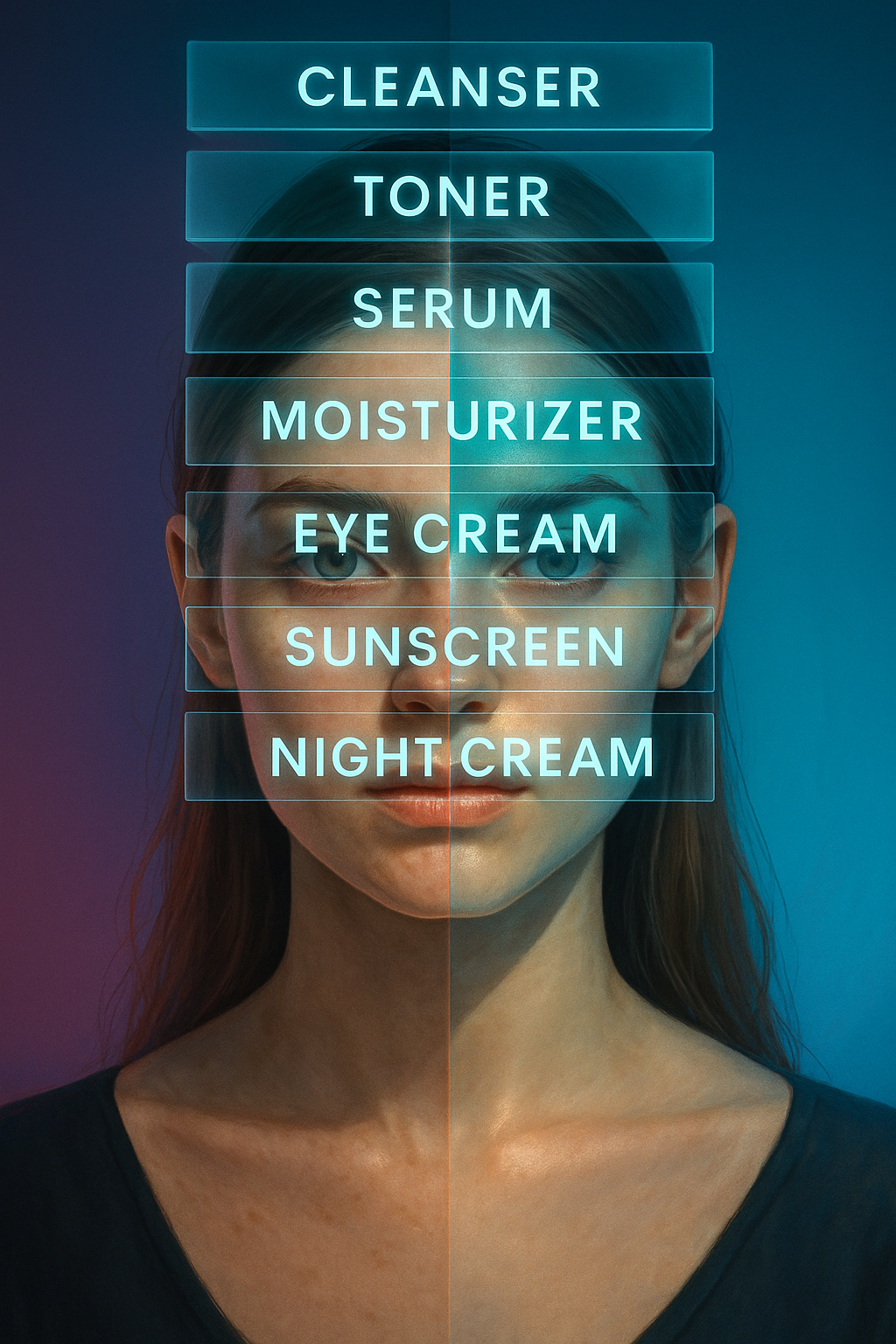
The single biggest driver of sensitive-skin flare-ups isn’t any one product — it’s stacking too many actives at once. A cleanser with salicylic acid, a vitamin C serum, a retinol, and an exfoliating toner in the same week is a barrier-stress routine even if every individual product is well formulated. For reactive skin, the more reliable approach is one active ingredient at a time, introduced two to three weeks apart, so a reaction can actually be traced back to its cause.
Reading a Full Ingredient List, Not Just the Front Label
Ingredient lists are ordered by concentration, which means the first five to seven ingredients after water are doing most of the work — and most of the risk. A moisturizer that lists fragrance third is a different product, practically speaking, than one that lists it seventeenth, even if both technically contain it. It’s worth building a habit of scanning the first third of any ingredient list before checking whether a soothing ingredient like centella or ceramides shows up further down — a small amount of a good ingredient buried at the bottom of a long list is doing very little.
It also helps to separate genuinely functional ingredients from ones added mainly for marketing. “Botanical extract” blends near the bottom of an ingredient list are often present in amounts too small to do much of anything, functional or irritating. The ingredients that matter most for sensitive skin are usually the ones with the highest concentration and the simplest names — glycerin, ceramides, niacinamide, panthenol — not the exotic-sounding botanical at position twenty-two.
What to Ask Before Trying a New Product
A few questions before adding anything new to a reactive-skin routine save a lot of trial and error: Does this product list fragrance or essential oils anywhere in the first ten ingredients? Am I already using another active ingredient (retinoid, exfoliating acid, vitamin C) that this might stack badly with? Is there a fragrance-free or minimal-ingredient version of this same product category available at a similar price? None of these questions guarantee a product will work, but they filter out a meaningful share of likely irritants before they ever touch skin.
Frequently Asked Questions
Does “hypoallergenic” on a label mean anything official?
No. It’s a marketing claim with no regulated definition or required testing in the United States. It’s worth reading the ingredient list regardless of what the front label says.
Can sensitive skin become less reactive over time?
Often, yes, if the underlying issue is a stressed barrier rather than a diagnosed condition. Simplifying a routine for four to six weeks and rebuilding slowly tends to reduce reactivity for a lot of people. If flare-ups persist despite a minimal routine, that’s a signal to see a dermatologist rather than keep product-testing.
Is expensive skincare safer for sensitive skin than drugstore skincare?
Not inherently. Price has no consistent relationship with irritation potential — plenty of drugstore ceramide-based moisturizers are gentler than prestige products loaded with fragrance and essential oils.
Should sensitive skin avoid exfoliating acids entirely?
Not necessarily, but the approach needs to be gentler than a standard routine — a low-percentage lactic or mandelic acid used once or twice a week is generally better tolerated than glycolic acid, and it should never be combined with a retinoid or another exfoliant on the same day.
Final Thoughts
Sensitive skin doesn’t need a special, expensive product line — it needs a shorter ingredient list, one new active at a time, and a little patience with the patch-testing process. If reactions keep happening even with a simplified routine, that’s worth bringing to a dermatologist rather than continuing to trial products on your own.
For more ingredient breakdowns and routine guides organized by skin concern, browse the Skincare section at gemifys.com.