
Updated for 2026.
Starting a skincare routine can feel like learning a foreign language. With countless products, conflicting advice, and overwhelming ingredient lists, it’s easy to give up before a routine has had time to actually work.
But here’s the truth: effective skincare doesn’t have to be complicated. Whether you’re 16 or 60, dealing with acne or aging, or have sensitive or oily skin, the fundamentals remain the same. This guide breaks down what you actually need to build a beginner routine that works — no chemistry degree required.
Why a Consistent Routine Changes Everything
Your skin is your body’s largest organ, and it regenerates on a roughly month-long cycle. Consistent care over that cycle can accelerate cell turnover for smoother skin, strengthen the moisture barrier to reduce irritation and breakouts, help protect against environmental damage that contributes to premature aging, and help balance oil production for clearer pores. None of this happens overnight — dermatologists generally point to somewhere in the four-to-twelve-week range before a new routine’s effects on texture, breakouts, or tone become clearly visible. Consistency, not complexity, is what actually moves the needle.
The Core Steps Every Beginner Needs
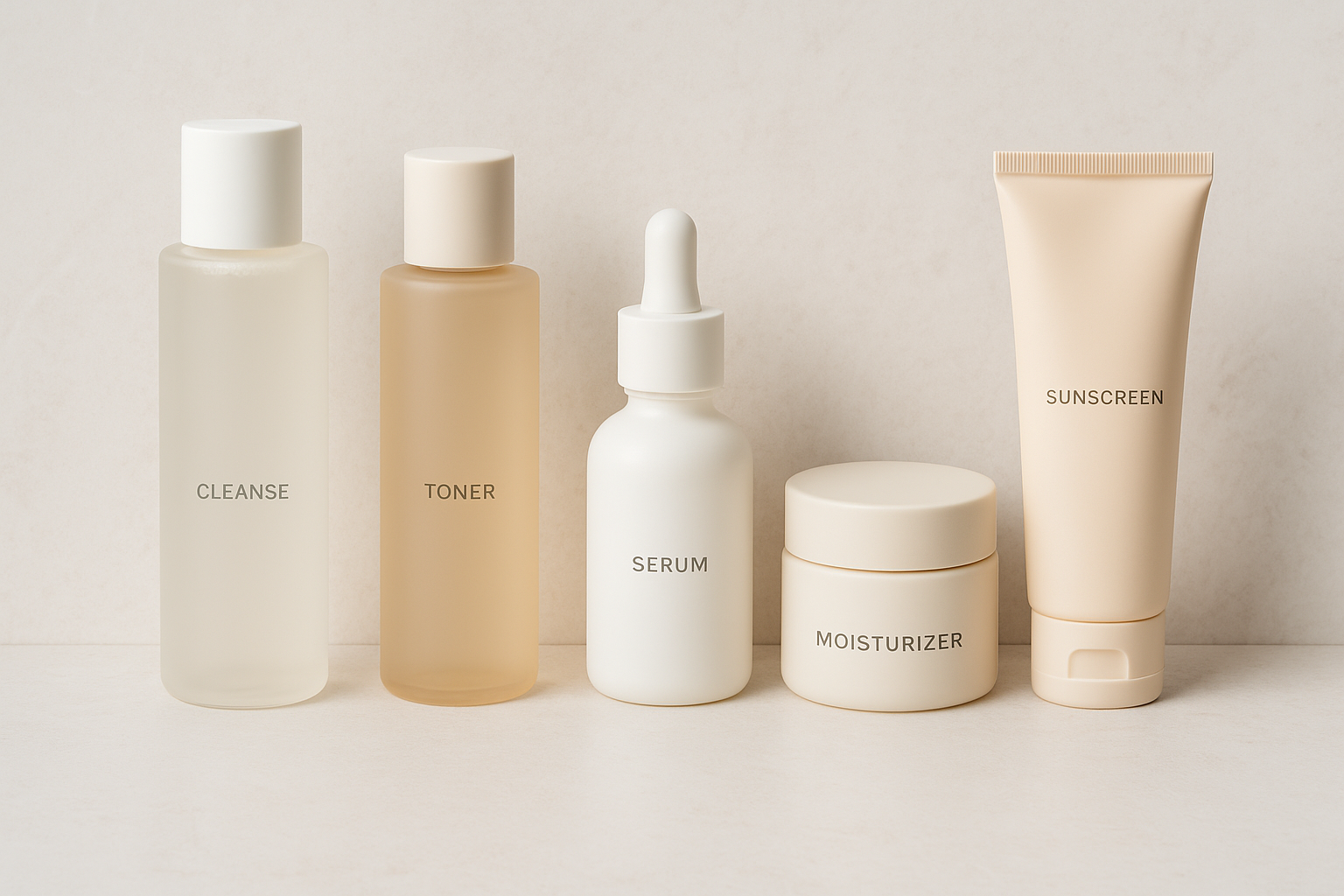
Cleanser removes dirt, oil, and environmental buildup without stripping the skin’s protective barrier. Cream or lotion cleansers with ceramides suit dry or sensitive skin; gel cleansers with salicylic acid suit oily or acne-prone skin; gentle foaming formulas work well for combination skin. Use lukewarm water, never hot, which strips the barrier.
Moisturizer locks in hydration and seals the barrier — every skin type needs one, including oily skin, since dehydrated skin often overproduces oil to compensate. Look for ceramides and glycerin for dry skin, lightweight gel formulas with hyaluronic acid for oily skin, and minimal-ingredient, fragrance-free formulas for sensitive skin.
Sunscreen is the single most important step in any routine. UV exposure is the leading cause of visible facial aging — wrinkles, dark spots, and loss of elasticity — and everything else in a routine is maintenance, while sunscreen is prevention. Broad-spectrum SPF 30 or higher, reapplied roughly every two hours during sun exposure, is the standard recommendation. Apply about a quarter teaspoon for the face and neck, and don’t skip it indoors — UV rays penetrate windows.
Serum is optional at the very start but worth adding once the basics feel consistent. Pick one that matches your primary concern: a vitamin C serum in the morning for dullness and uneven tone, niacinamide for oiliness and enlarged pores, or hyaluronic acid for dehydration. Start with one, not all three at once, and give each four to six weeks before judging results.
A Simple Morning and Evening Routine
Morning (5–10 minutes): gentle cleanser, then a vitamin C serum if you’re using one (wait a few minutes for absorption), then moisturizer, then broad-spectrum SPF 30+ as the final step.
Evening (10–15 minutes): remove makeup first if worn, then cleanse, then an optional treatment serum (niacinamide, hyaluronic acid, or a retinoid once your skin has built tolerance), then a night moisturizer. Evening is when stronger active ingredients and richer, more repairative products belong, since skin does more of its repair work overnight.
Common Beginner Mistakes
- Starting too many products at once — introduce one new product every one to two weeks, starting with cleanser, moisturizer, and sunscreen before adding serums or treatments.
- Skipping the patch test — apply a new product to a small area (behind the ear or on the jawline) daily for several days before using it on the full face, since cumulative irritation from an active ingredient often doesn’t show up after a single use.
- Expecting overnight results — most active ingredients need four to twelve weeks of consistent use before their effects on texture, tone, or breakouts are clearly visible.
- Applying products in the wrong order — the general rule is thinnest to thickest: cleanser, serum, moisturizer, then sunscreen or oil last.
- Over-exfoliating or over-cleansing — twice-daily cleansing is generally the ceiling, and exfoliating more than a few times a week tends to damage the moisture barrier rather than improve texture.
Building an Effective Routine on a Budget
A functional four-product starter kit — a gentle cleanser, a basic moisturizer, a broad-spectrum SPF, and a single targeted serum — is achievable for well under $60 using widely available drugstore staples, since drugstore formulation quality has closed much of the gap with prestige brands over the last decade for these basics. Buying in sets or during sales, focusing on ingredients rather than packaging, and resisting the urge to buy a full product line at once are the most reliable ways to keep a starter routine affordable.
Customizing by Skin Type
For acne-prone skin, the ingredients with the most consistent evidence are salicylic acid, niacinamide, and benzoyl peroxide, introduced gradually. For anti-aging concerns, a retinoid remains the ingredient with the strongest long-term evidence for texture and fine lines, paired with a daily broad-spectrum sunscreen — without consistent SPF, a retinoid’s benefits are undermined by continued UV damage. For sensitive skin, the priority is a short, simple ingredient list: fragrance-free, minimal-ingredient formulas with ceramides tend to outperform elaborate multi-step routines built around actives the skin isn’t ready for.
Frequently Asked Questions
How long before I see results?
Hydration improvements often show up within one to two weeks; texture and brightness changes generally take three to four weeks; acne improvement can take six to eight weeks; and anti-aging results from ingredients like retinoids typically take eight to twelve weeks of consistent use.
Do I need different products for different seasons?
Often, yes — many people benefit from lighter, gel-based formulas in summer and richer, cream-based products in winter, along with adjustments during hormonal shifts like pregnancy or menopause.
Should I follow skincare trends I see on social media?
Be cautious of any trend promising dramatic, fast results. It’s generally safer to prioritize ingredients with real evidence behind them, introduce new products gradually, and choose products suited to your specific skin type rather than a one-size-fits-all viral routine.
Final Thoughts
Building an effective skincare routine doesn’t require a big budget or a complicated ten-step process. Start with a cleanser, a moisturizer, and daily sunscreen, introduce one new product at a time, and give each addition several weeks before judging whether it’s working. Consistency does more for skin health than any single “miracle” product.
For skin-type-specific routines, ingredient deep dives, and cost breakdowns on treatments and products, browse the Skincare section at gemifys.com.