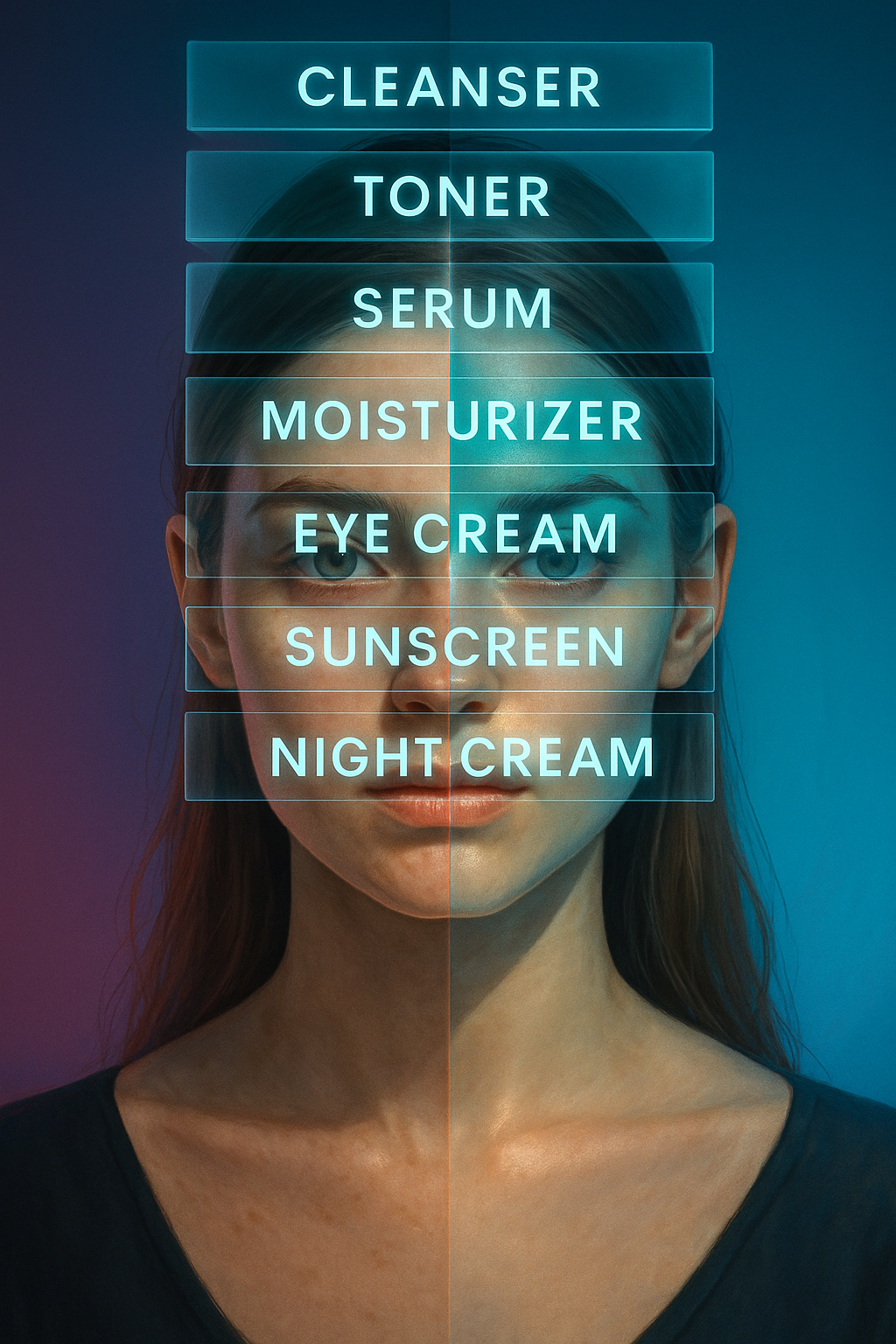

Walk into a skincare aisle or open a beauty retailer’s app and the “starter” category alone can run to a dozen products. Almost none of that dozen is required to have functional, healthy skin. A genuine starter kit is smaller, cheaper, and less exciting than the marketing suggests — and that’s exactly why it works.
The Three Products That Are Actually Non-Negotiable
Strip away every trend and you’re left with three categories that do the structural work of a routine:
- A gentle cleanser matched to your skin type (cream/lotion for dry or sensitive skin, gel for oily or acne-prone skin).
- A moisturizer that supports the barrier — yes, even for oily skin, since dehydrated skin often overproduces oil to compensate.
- A broad-spectrum SPF 30 or higher, applied daily regardless of weather or indoor plans, since UV exposure through windows still reaches skin.
That’s the entire non-negotiable list. Everything past this point is optimization, not foundation.
What’s Genuinely Useful to Add Next (In Order)
Once the three-product base is consistent for a few weeks, the next additions with the best evidence-to-cost ratio are, roughly in order of impact:
- A single targeted serum for your primary concern — niacinamide for oiliness and texture, hyaluronic acid for dehydration, or a vitamin C for dullness and uneven tone. One, not all three at once.
- A gentle chemical exfoliant (a low-percentage AHA or BHA) used two to three times a week, which does more for texture and tone than most “brightening” products combined.
- A retinoid, introduced slowly, once the basics and an exfoliant are tolerated well — this is genuinely the ingredient with the strongest long-term evidence for texture and fine lines, but it’s also the one most likely to cause irritation if added too early in a routine.
What’s Marketing, Not Necessity
A few product categories are heavily marketed as essential and rarely are:
- Toner — modern hydrating toners aren’t harmful, but they’re an optional extra step, not a functional requirement, once cleansing and moisturizing are handled well.
- Eye cream as a separate category — the skin around the eyes benefits from the same moisturizer and SPF ingredients as the rest of the face in most cases; a dedicated eye cream is a preference, not a physiological necessity, for most people without a specific under-eye concern.
- Essence, multiple serums layered daily, and “setting” mists — these add cost and complexity without a corresponding jump in results for most skin.
What a Real Starter Kit Costs
Drugstore ingredient quality has closed most of the gap with prestige brands over the last decade, particularly for basics like ceramide moisturizers and mineral sunscreens. A functional four-product starter kit — cleanser, moisturizer, SPF, and one targeted serum — typically runs somewhere in the $35 to $60 range using drugstore staples, versus $150 or more for the equivalent from prestige counters. The formulation difference at that level is usually packaging, fragrance, and marketing, not active ingredient concentration.
A Sequencing Mistake That Undoes All of It
Even a well-chosen starter kit fails if products go on in the wrong order or too many go on at once. The reliable rule is thinnest to thickest: cleanser, then any water-based serum, then moisturizer, then sunscreen last in the morning. Adding more than one new active ingredient per week makes it nearly impossible to tell which product caused an improvement or a reaction.
How to Tell a Real Product Recommendation From Marketing Noise
Skincare marketing leans heavily on a handful of persuasive but low-information claims: “dermatologist recommended” (which has no standardized meaning or required disclosure of how many dermatologists, or whether they were paid), “clinically proven” (often referring to an internal, unpublished study rather than independent research), and “natural” (a term with no regulated definition in cosmetics). None of these claims are automatically false, but none of them substitute for checking the actual ingredient list and concentration. A product with a strong, simple ingredient list and no flashy claims is frequently a better buy than one with an impressive-sounding marketing story and a diluted formula.
Building the Kit in the Right Order, Week by Week
Rather than buying all three to four starter products at once, a staggered approach makes it easier to identify what’s actually working. Week one: cleanser and moisturizer only, to establish a comfortable baseline. Week two: add sunscreen if it isn’t already part of the morning routine. Around week four, once the basics feel stable, add a single targeted serum based on your primary concern. This slower pace costs nothing extra and makes any reaction or improvement much easier to attribute to a specific product, rather than guessing which of four new products caused a change.
Frequently Asked Questions
Do I need different products for morning and night?
Not at the starter-kit stage. The same cleanser and moisturizer can work for both; the only mandatory morning-only addition is sunscreen.
Is it worth buying a “beginner bundle” from a brand?
Sometimes, if the bundle is genuinely the three or four basics at a discount. Often it’s padded with a toner, mask, or extra serum that inflates the price without adding necessity. Adding up the individual product prices separately before comparing to the bundle price is the only reliable way to know if it’s an actual discount.
How long before a starter routine shows results?
Hydration and comfort improvements are often noticeable within one to two weeks; texture and tone changes generally take six to eight weeks of consistent use before they’re clearly visible.
What should I do if a new product causes irritation?
Stop using it immediately rather than pushing through, since continued use on already-irritated skin tends to make recovery slower. Give skin three to five days on just the basics (cleanser and moisturizer) before reintroducing anything else.
Final Thoughts
A real starter kit is three products deep, not ten. Get the cleanser, moisturizer, and SPF right and consistent first, then add one targeted product at a time based on an actual concern — not based on what the next aisle over is selling.
Gemifys covers skin-type-specific routines and ingredient breakdowns in more depth in the Skincare section at gemifys.com.
If you’re assembling this kit from a completely blank routine, our full skincare routine for beginners guide walks through the same steps with a week-by-week build order.