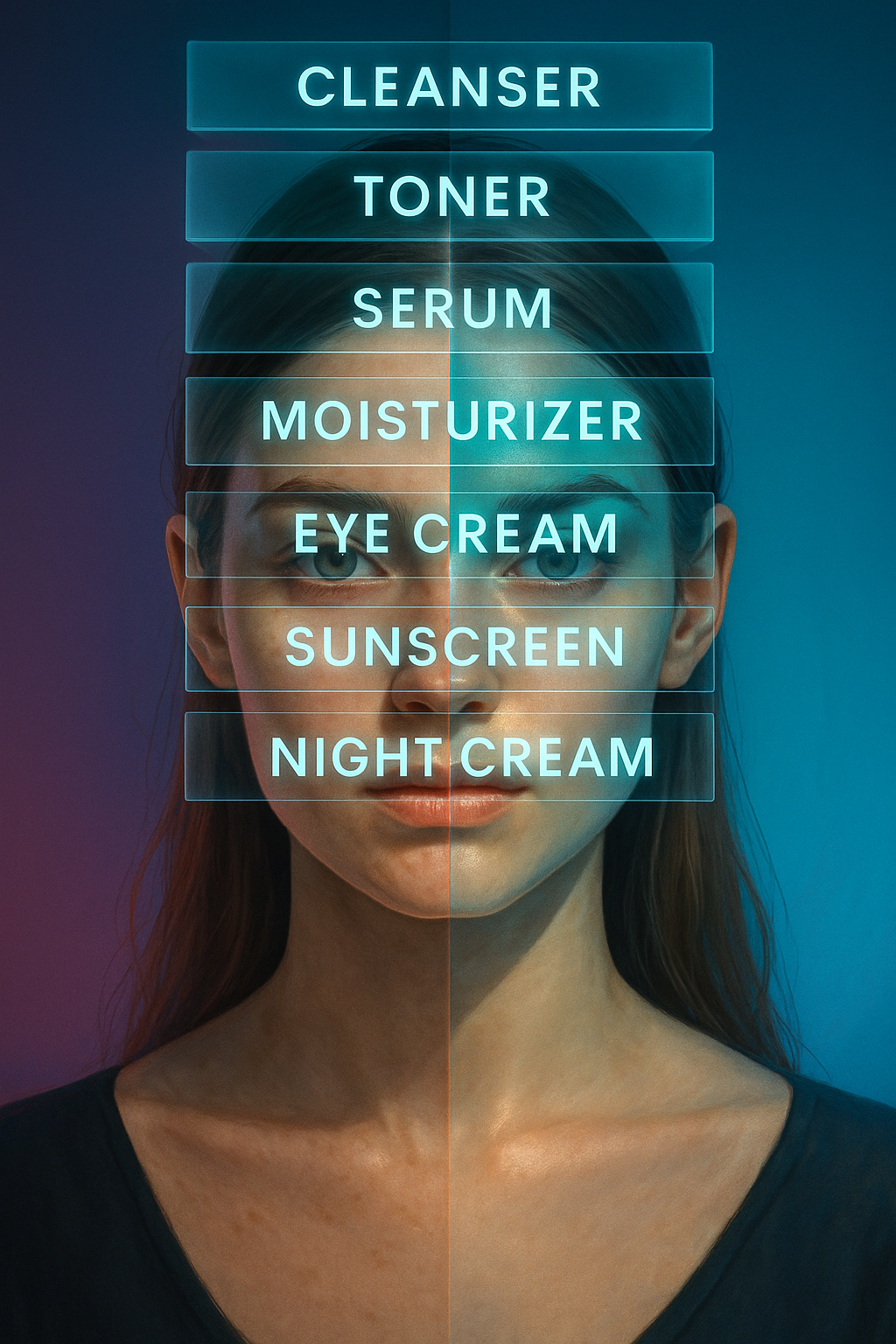
If you tolerate a retinoid everywhere else on your face but your cheeks flare up red, stinging, and irritated no matter how carefully you introduce it, you’re not imagining things — and you’re not doing it wrong. Cheek skin, especially in people who also have an underlying tendency toward rosacea or generally reactive skin, behaves differently from the rest of the face when it comes to retinoids like tretinoin.
Why cheeks react differently
Skin thickness and barrier strength vary quite a bit across the face. The skin over the cheeks tends to have fewer oil glands than the T-zone (forehead, nose, chin), which means it holds less of its own natural lipid barrier and can dry out — and become irritated — more easily. According to the American Academy of Dermatology (AAD), redness, peeling, and stinging (sometimes called “retinization” or retinoid dermatitis) are common side effects as skin adjusts to a retinoid, and they tend to be more pronounced on thinner, drier, or more sensitized areas of skin.
If there’s also an underlying tendency toward rosacea — even a mild, undiagnosed version limited to redness and visible capillaries on the cheeks, without the acne-type bumps — that combination can make cheeks considerably more reactive to retinoids than acne-prone areas like the chin or forehead. The Cleveland Clinic notes that rosacea-prone skin has a compromised skin barrier and heightened sensitivity to topical products, including retinoids, exfoliating acids, and even some “gentle” ingredients that other skin types tolerate well.
Approaches dermatologists commonly suggest
None of the following is a guarantee, and what works varies from person to person — this is general education, not a substitute for a dermatologist who can actually examine your skin. Some commonly discussed strategies, per dermatology sources like the AAD and Mayo Clinic, include:
- Treat different zones differently. Some dermatologists recommend applying a retinoid only to the areas that actually need it (like an acne-prone chin) rather than the whole face uniformly, especially when one zone is consistently reactive.
- The “moisturizer sandwich.” Applying a bland, fragrance-free moisturizer before and after the retinoid can buffer its strength, particularly on more sensitive zones.
- Lower frequency, not just lower strength. Some people tolerate a stronger formulation used twice a week better than a weaker one used nightly, because the skin gets more recovery time between applications.
- Simplify everything else. When a barrier is already compromised, actives like niacinamide, hyaluronic acid serums (some formulations contain other irritating ingredients despite the “hydrating” label), and any chemical exfoliation can compound irritation rather than help it, even though they’re often marketed as gentle.
- Let the barrier fully recover before restarting. A period of using only a simple moisturizer and gentle cleanser, with no actives, is a standard first step recommended for compromised skin barriers before reintroducing anything active.
When it’s worth a dermatology visit
Redness and broken capillaries that persist even between retinoid use, or a pattern where an area reacts strongly to nearly everything (including products other areas of your skin tolerate fine), is worth discussing with a board-certified dermatologist. That combination can point toward rosacea or another underlying reactive skin condition that benefits from a tailored treatment plan — which might mean a different retinoid formulation, a different concentration, prescription options aimed at rosacea specifically, or simply a different order of operations than what’s worked on the rest of your face.
This article is for general education and is not a substitute for personalized medical or dermatological advice. If you’re dealing with persistent skin irritation, redness, or a suspected condition like rosacea, talk to a board-certified dermatologist about what’s right for your skin.
— Gemifys