
Most pregnancy skincare advice online falls into one of two camps: a panicked list that tells you to throw out half your bathroom cabinet, or a dismissive one that insists nothing you put on your skin could possibly matter. Neither is accurate. The real picture, based on what dermatologists and OB-GYNs actually flag, is a short list of specific ingredients with a documented reason for concern, sitting inside a much larger routine that does not need to change at all.
The Short List Dermatologists Actually Flag
The ingredients that come up again and again in pregnancy-safety guidance are retinoids (retinol, tretinoin, adapalene, and related vitamin A derivatives), hydroquinone, and, for some clinicians, high-dose salicylic acid used systemically rather than in a leave-on facial product. That is a much shorter list than most viral pregnancy-skincare posts imply, and it is worth understanding why each one made the list rather than treating it as an arbitrary rule.
Why Retinoids Are the Main Concern
Oral retinoids, like isotretinoin, have well-documented links to serious birth defects when taken during pregnancy — this is not in dispute and is why isotretinoin prescribing requires strict pregnancy-prevention programs. Topical retinoids are a murkier case: absorption through skin is low, and large studies have not shown the same clear risk pattern as the oral drugs. Even so, most dermatologists and professional bodies recommend pausing topical retinoids during pregnancy anyway, on the reasoning that the ingredient is genuinely useful the other 90% of your life and there is no strong reason to keep using it during the one window where the safety data is least reassuring. That is a precautionary stance, not a proven-harm one, and it is worth knowing the difference when you read about it.
Hydroquinone and the Skin-Lightening Question
Hydroquinone, the strongest topical skin-lightening ingredient available, has a higher systemic absorption rate than most other actives — studies have found it absorbed at meaningfully higher percentages than many other topical treatments, which is the main reason it gets flagged for pregnancy specifically. If melasma or hyperpigmentation is a concern during pregnancy (and pregnancy itself is a common trigger for melasma, sometimes called the mask of pregnancy), most dermatologists steer patients toward the alternatives below rather than hydroquinone until after delivery and breastfeeding are done.
What Is Actually Considered Fine
This is the part that gets far less attention than the avoid-list, and it is arguably more useful: vitamin C, niacinamide, azelaic acid, glycolic acid, lactic acid, and mineral sunscreen (zinc oxide or titanium dioxide) are all generally considered acceptable during pregnancy by the same professional bodies that flag retinoids and hydroquinone. Azelaic acid in particular is often specifically recommended as a pregnancy-safe alternative for both acne and pigmentation concerns, since it addresses some of the same issues retinoids and hydroquinone are used for. Chemical sunscreens are a more mixed conversation — some ingredients in that category have raised more questions than others, which is part of why mineral sunscreen tends to be the default recommendation rather than a blanket rule against all chemical filters.
Building a Pregnancy-Safe Routine, Practically
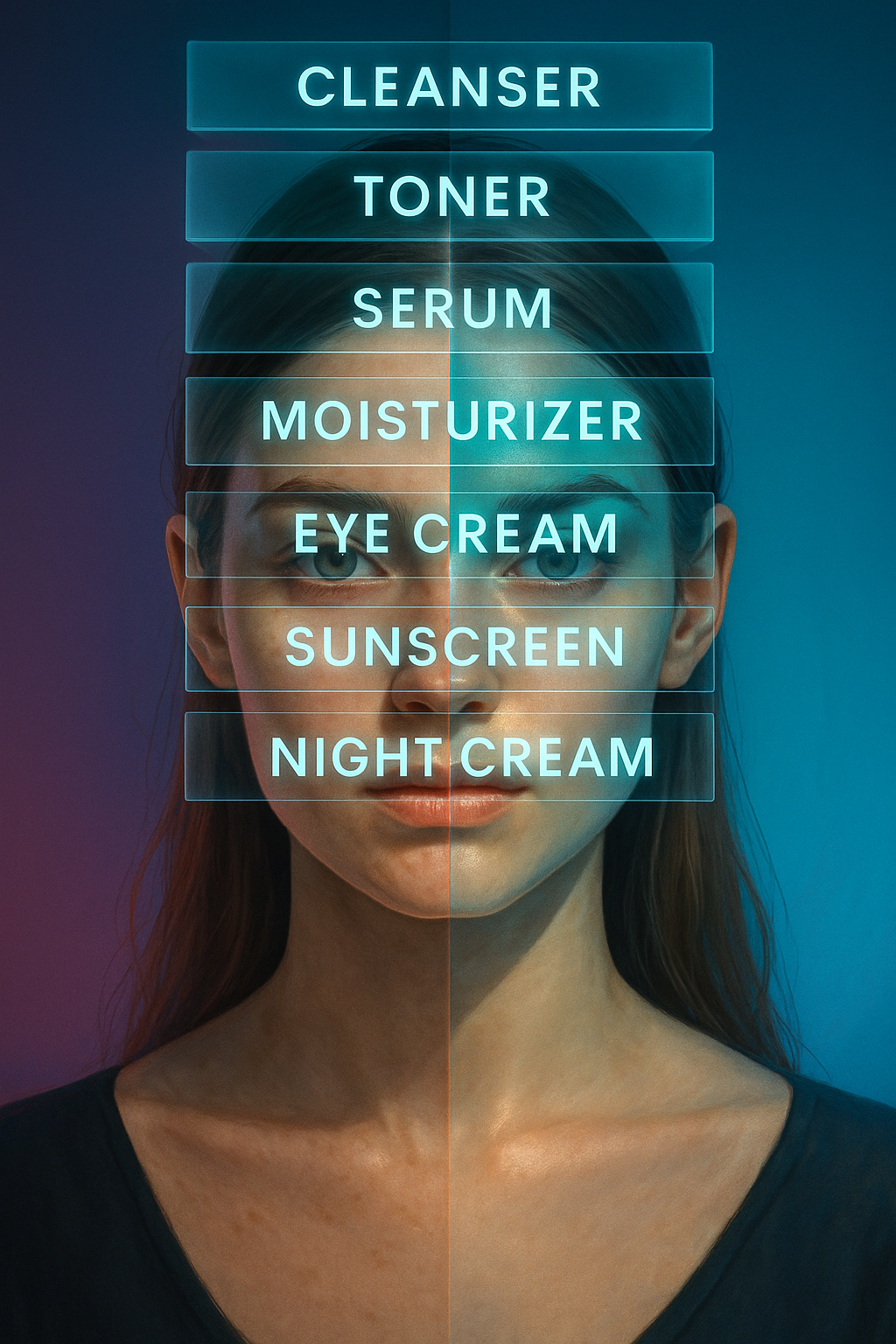
In practice, this usually means: keep your cleanser, keep your moisturizer, switch a retinoid to a gentler alternative like azelaic acid or a bakuchiol-based product if you want something in that general category, keep vitamin C and niacinamide if you already use them, and check that your sunscreen is mineral-based or confirm your specific chemical formula with your OB-GYN. If you are using a prescription treatment for acne, melasma, or another condition, the right move is a direct conversation with the prescribing doctor rather than stopping or substituting on your own — some prescription options have pregnancy categories that are more nuanced than a simple avoid-or-fine label, and your OB-GYN or dermatologist can weigh your specific history.
What About Breastfeeding?
The breastfeeding window has some overlap with the pregnancy list but is not identical to it, since the concern shifts from placental transfer to transfer through breast milk. Retinoids are still generally advised against during breastfeeding for the same precautionary reasoning as pregnancy. Hydroquinone guidance is more mixed depending on the source, largely because there is less direct research specific to lactation than to pregnancy. Vitamin C, niacinamide, azelaic acid, and mineral sunscreen remain in the generally-fine category through breastfeeding as well. If you are nursing and unsure about a specific product, the same rule applies as during pregnancy: ask the prescribing doctor or your pediatrician’s office rather than defaulting to whatever a skincare forum says, since infant exposure through milk is a different calculation than skin absorption during pregnancy itself.
Frequently Asked Questions
Is it safe to use vitamin C serum while pregnant?
Yes — vitamin C is broadly considered pregnancy-safe and is one of the more commonly recommended actives for pregnancy-related pigmentation concerns.
What about products I used before I knew I was pregnant?
Occasional or short-term use before pregnancy was confirmed is a common concern, and it is worth raising with your OB-GYN rather than searching for reassurance online — they can put your specific timeline and product in context.
Can I keep using my regular sunscreen?
Mineral sunscreens (zinc oxide, titanium dioxide) are the default safe choice. If your sunscreen is chemical-based, it is worth checking the specific active ingredients against current guidance or asking your OB-GYN, since not all chemical filters carry the same level of caution.
What if I am trying to conceive but not yet pregnant?
Guidance for people actively trying to conceive is more variable than for confirmed pregnancy, since the exact timing of conception is unknown in advance. Some clinicians recommend applying the same precautionary list once you are actively trying, while others focus the strictest guidance on confirmed pregnancy itself — this is a reasonable question to bring to your OB-GYN as part of preconception planning rather than deciding on your own.
Final Thoughts
The pregnancy-safe skincare conversation is smaller and more specific than the internet often makes it sound: a short list of ingredients to pause, a longer list of actives that are still fine, and a genuine need to loop in your OB-GYN or dermatologist for anything prescription-strength. Treating every active ingredient as equally risky just adds stress to nine months that already have enough of it.
For more grounded, dermatology-sourced breakdowns like this one, gemifys.com covers skincare topics the same way — checkable specifics over blanket rules.