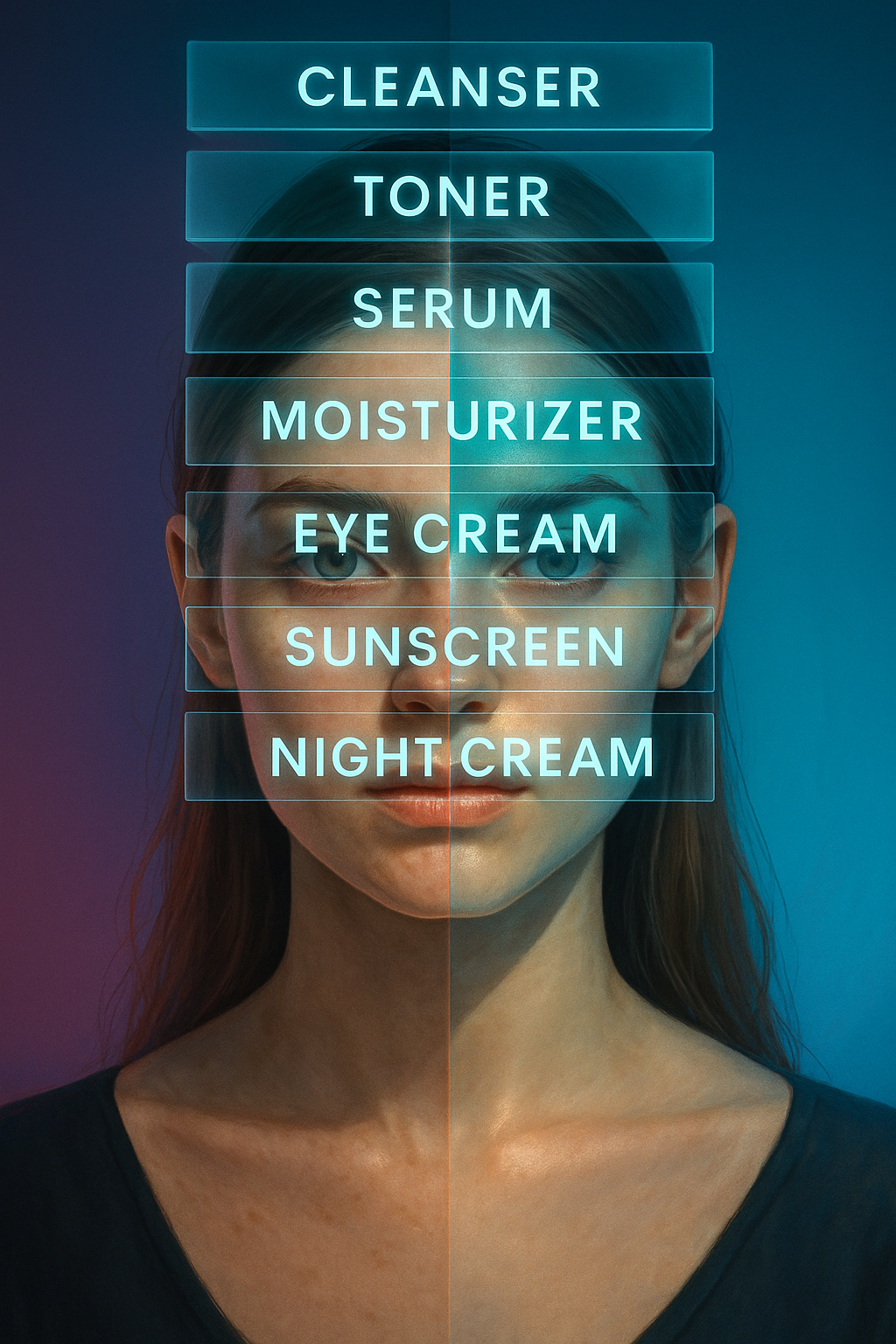

A ten-step skincare routine looks impressive on video. It does not always look good on skin, and a new survey of Dutch dermatologists suggests it is showing up in their exam rooms more often than it used to — specifically among younger patients who picked up their routines from social media, not a dermatologist.
What 168 Dermatologists Told Researchers
Researchers at Alrijne Hospital in Leiden surveyed 168 dermatologists across the Netherlands about what they were seeing in practice. More than 90 percent reported treating younger patients for skin problems they linked directly to using multiple products at once — including allergic reactions, acne flares, and eczema. Every dermatologist surveyed agreed on one specific point: patients had been misled about what these products actually do by influencers promoting them online.
The pattern the survey describes is a specific one. Influencer routines frequently stack as many as ten products in a single sitting — cleansers, exfoliants, multiple active-ingredient serums, and heavy moisturizers — applied back to back, often daily. That is a lot of active chemistry layered onto skin that, in a teenager, is often still developing its own barrier function.
The Ingredients Actually Causing the Problems
Two categories came up repeatedly in dermatologists’ reports. Retinoids, when used at high concentrations or stacked with other actives, were a common source of irritation — not surprising, since retinoids are genuinely potent ingredients meant to be introduced slowly and used carefully, not layered under three other active products. Exfoliating acids — AHAs and BHAs — showed up just as often, particularly when used more frequently than skin can tolerate or combined with other exfoliating or active ingredients in the same routine.
Neither ingredient category is inherently dangerous. Both are backed by real evidence when used appropriately, at sensible concentrations, and introduced one at a time. The problem the survey describes is not the ingredients themselves — it is multiple potent actives combined, at unnecessary frequency, on skin that has not been eased into any of them individually.
Why Younger Skin Is More Vulnerable to This Specific Problem
Skin barrier function — the outermost layer’s ability to hold in moisture and keep out irritants — is still maturing through the teenage years. A barrier that is not yet fully robust is more easily disrupted by aggressive exfoliation or high-concentration actives, which is part of why dermatologists see a disproportionate share of irritation and reactive breakouts in younger patients trying adult-marketed, multi-step routines rather than a simpler regimen suited to their skin’s actual needs.
How Many Steps a Routine Actually Needs
Dermatology guidance has not moved much on this point even as routines marketed online have gotten longer: for most people, especially teenagers without a specific diagnosed skin condition, a routine built around a gentle cleanser, a daily broad-spectrum sunscreen, and a basic moisturizer covers the fundamentals. Adding a single active ingredient — not several at once — and introducing it slowly is the standard, evidence-backed way to expand from there, ideally with guidance from a dermatologist rather than a product bundle sold as a routine.
What Parents and Teens Can Actually Do
Reading an ingredient list before a routine is added, rather than after a reaction shows up, is the most useful single habit here. Checking whether a new product contains a retinoid, an AHA, or a BHA — and whether any other product already in the routine does too — takes a minute and can prevent the most common version of this problem: two or three active ingredients stacked without anyone realizing it, because each came from a different bottle sold as a separate step.
It also helps to separate a skincare video’s entertainment value from its medical accuracy. An influencer demonstrating a ten-step routine on camera is not the same as a dermatologist recommending it for a specific skin type or concern, and the survey’s consistent finding — every dermatologist surveyed reporting patients misled by online routines — suggests that gap is a real, widespread pattern rather than an occasional mismatch.
If a teen already has a reaction — new breakouts, redness, or irritation that started after adding several products — the most useful first step is usually simplifying back down to a gentle cleanser, sunscreen, and moisturizer for a couple of weeks and letting the skin settle before reintroducing anything else one at a time.
Frequently Asked Questions
Is it bad for a teenager to use skincare products at all?
No — a simple routine (cleanser, sunscreen, basic moisturizer) is entirely reasonable and often helpful. The concern is specifically about stacking many active ingredients at once, not basic skincare itself.
How do I know if a reaction is from over-layering products?
New irritation, redness, or breakouts that started after adding several new products at once — rather than one at a time — is a reasonable signal to simplify the routine and see a dermatologist if it does not settle down within a couple of weeks.
Should retinoids and exfoliating acids be avoided by teens entirely?
Not necessarily — but they are ingredients worth introducing one at a time, at a sensible frequency, ideally with input from a dermatologist rather than by following an influencer’s full routine at once.
Is it the products themselves that are the problem, or how they are being combined?
Based on what dermatologists reported, it is overwhelmingly the combination and frequency, not any single ingredient in isolation. The same active ingredients used individually and introduced slowly are generally well tolerated.
Where can a family get a reliable second opinion on a routine that seems too aggressive?
A board-certified dermatologist is the most reliable source for a specific skin type and concern, and many offer shorter consultations specifically for reviewing an existing routine rather than requiring a full new-patient workup.
Final Thoughts
The core finding here is not that skincare is dangerous — it is that more is not automatically better, and that is especially true for skin that is still maturing. A short, consistent routine outperforms a long, aggressive one for most people, teens included.
For guidance on building a routine around what your skin actually needs, see the full library of skincare guides at gemifys.com.