
Most people build their skincare routine and their makeup routine as two separate rituals, then wonder why their foundation pills up by 10am or their SPF leaves a grey cast under concealer. The order you layer products in is not a minor styling choice — it is the difference between ingredients absorbing properly and a face full of products sliding past each other.
The Rule Dermatologists Actually Use: Thin to Thick
Cleveland Clinic dermatologist Dr. Melissa Piliang puts it simply: skincare should be applied from lightest to heaviest, or thinnest to thickest, texture. The logic is straightforward — a thick cream applied first creates a barrier that a thin, water-based serum then cannot penetrate. Apply products out of order, and “your skin will feel the consequences,” as the guidance puts it: patchy absorption, pilling, and actives that never actually reach the skin they were meant to treat.
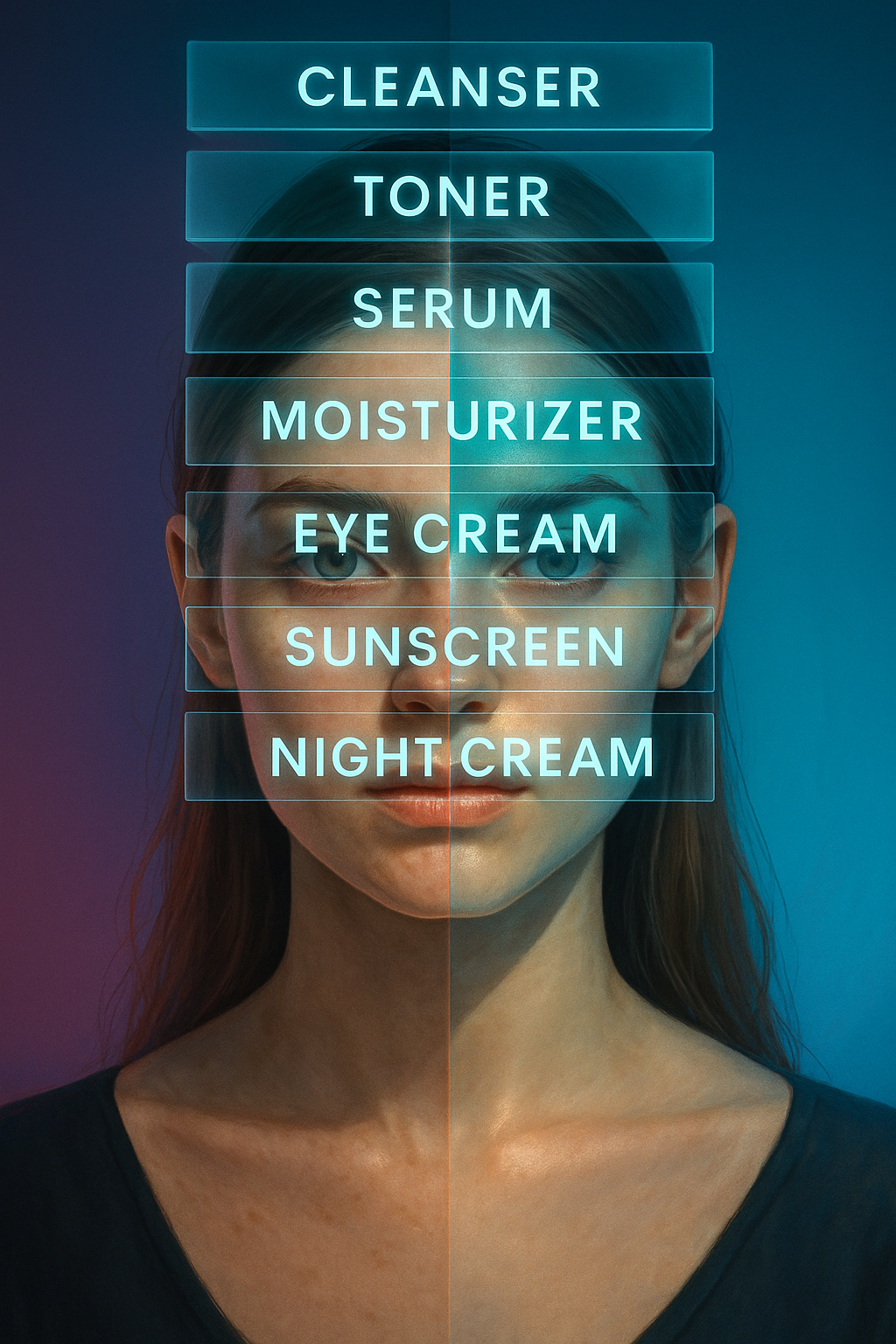
For a morning routine that ends in makeup, that order is: cleanser, then any serums, then moisturizer, then sunscreen — and only after that, makeup. Sunscreen is a step, not an afterthought squeezed in before foundation; it needs a few minutes to set before anything goes on top of it.
Step by Step: Skincare Into Makeup Without Pilling
Here is the sequence that keeps everything workable, with the reasoning for each step:
- Cleanser. Removes overnight oil buildup so nothing that follows has to fight through residue.
- Treatment serums (if using). Water-based actives like niacinamide or vitamin C go on damp skin, before anything heavier, so they can actually absorb.
- Moisturizer. Choose a lighter, faster-absorbing formula on makeup days — a rich night cream under foundation is a common cause of midday slip and pilling.
- Sunscreen. Give it 3 to 5 minutes to sink in and set before touching primer or foundation. This single wait is the step most people skip, and it is the one most responsible for a chalky or greasy base underneath makeup.
- Primer (optional). A thin layer, and only after sunscreen has fully absorbed.
- Makeup. Foundation, concealer, and the rest of the routine go on last, once every skincare layer has had time to settle.
Why Pilling Happens (and It Is Rarely the Foundation’s Fault)
Pilling — those little grey rolls of product that appear when you blend foundation — gets blamed on makeup formulas, but it is usually a skincare-layering problem. Silicone-based primers do not mix well with silicone-heavy sunscreens; too many product layers stacked without absorption time will always ball up under friction; and skipping the wait time after sunscreen is one of the most common causes reported by dermatologists and makeup artists alike. Before switching foundations, try slowing down the skincare steps first — it solves the problem more often than a new base product does.
What Actually Needs to Change for Makeup Days vs. Non-Makeup Days
The order does not change between a makeup day and a bare-skin day — cleanser, serum, moisturizer, SPF stays fixed either way. What should change is texture and quantity. On makeup days, use less moisturizer than you might at night, choose gel or lotion textures over balms, and consider a mattifying or lightweight mineral sunscreen if your foundation tends to slide. On non-makeup days, there is more room for richer textures since nothing needs to sit cleanly on top.
Does Skincare Under Makeup Actually Keep Working?
Yes, with a caveat: active ingredients like niacinamide, vitamin C, or peptides continue working under makeup because they have already absorbed into skin before foundation goes on — makeup sitting on the surface does not block what is already inside the skin barrier. The exception is sunscreen, which needs to stay as an intact physical layer on top of skin to keep protecting; heavy touch-ups with oil-based products or excessive blotting throughout the day can thin that layer faster than people realize, which is part of why reapplying SPF over makeup (with a powder or spray formula) matters more than most routines account for.
Quick FAQ
Can I skip moisturizer on makeup days to reduce slip? Not recommended — skipping it usually backfires, since skin compensates with more oil production later in the day, which causes more slip, not less. Use less, not none.
Does primer replace moisturizer? No. Primer is a makeup-adhesion product, not a treatment step, and using it in place of moisturizer leaves skin under-hydrated under foundation.
Why does my sunscreen leave a white cast under makeup even though I wait? Mineral (zinc oxide) sunscreens are more prone to this than chemical filters. Trying a hybrid mineral-chemical formula, or a tinted mineral SPF, often solves it without abandoning mineral protection altogether.
Do I need a separate moisturizer if my sunscreen is also moisturizing? It depends on your skin. A well-formulated moisturizing sunscreen can stand in for a separate moisturizer on an average day, but on especially dry days, or with drying actives like retinol or exfoliating acids in the evening routine, a dedicated moisturizer underneath still gives skin more consistent hydration than sunscreen alone was designed to provide.
Should eye cream go before or after moisturizer? Before, following the same thin-to-thick logic — eye creams are typically formulated lighter than facial moisturizer, and applying facial moisturizer first can create a barrier that keeps the eye product from absorbing where it is meant to work.
Evening Skincare: A Different Order, Fewer Constraints
Without sunscreen or makeup in the mix, evening routines have more flexibility, but the thin-to-thick principle still applies: cleanser (or a double cleanse if wearing makeup or heavy sunscreen), treatment serums like retinol or exfoliating acids, then moisturizer to finish. Because there is no makeup layer to protect, evening is also the more forgiving time to use richer, more occlusive moisturizers or facial oils that would feel too heavy under a foundation.
Final Thoughts
The order itself is not complicated — cleanser, serum, moisturizer, sunscreen, then makeup — but the pacing between steps is what most routines get wrong. Giving sunscreen its full absorption window before anything goes on top of it fixes more pilling and cast issues than switching products ever will.
For more grounded, dermatologist-informed skincare guides like this one, browse the Skincare section at gemifys.com.