Anyone who has started a retinoid like tretinoin has probably heard the standard advice: apply a barrier — often petroleum jelly — around the eyes, nose, and lips to protect thinner, more sensitive skin from irritation. It’s solid advice in principle, but in practice it can be genuinely annoying: smudged contacts, greasy glasses lenses, and a strong urge to rub it all off before it fully absorbs.
Why the eye area needs extra care with retinoids
The skin around the eyes is thinner and more delicate than skin elsewhere on the face, which makes it more prone to dryness, flaking, and irritation from active ingredients like tretinoin. The American Academy of Dermatology (AAD) notes that retinoids can cause redness, peeling, and sensitivity, especially in the first few weeks of use, and recommends avoiding the immediate eye area and applying a small amount of moisturizer to sensitive zones as a buffer. Mayo Clinic similarly advises keeping tretinoin away from the eyes, mouth, and mucous membranes, since it can cause stinging or irritation if it gets into these areas.
Alternatives to a heavy Vaseline barrier
If a thick petroleum jelly layer around the eyes feels uncomfortable or keeps ending up on your contacts, a few adjustments that dermatology sources commonly suggest may help:
- Use a thinner layer, further from the lash line. A “buffer zone” of ordinary facial moisturizer applied just under the brow bone and along the upper cheekbone — rather than right up to the lower lash line — can reduce product transfer while still protecting delicate skin.
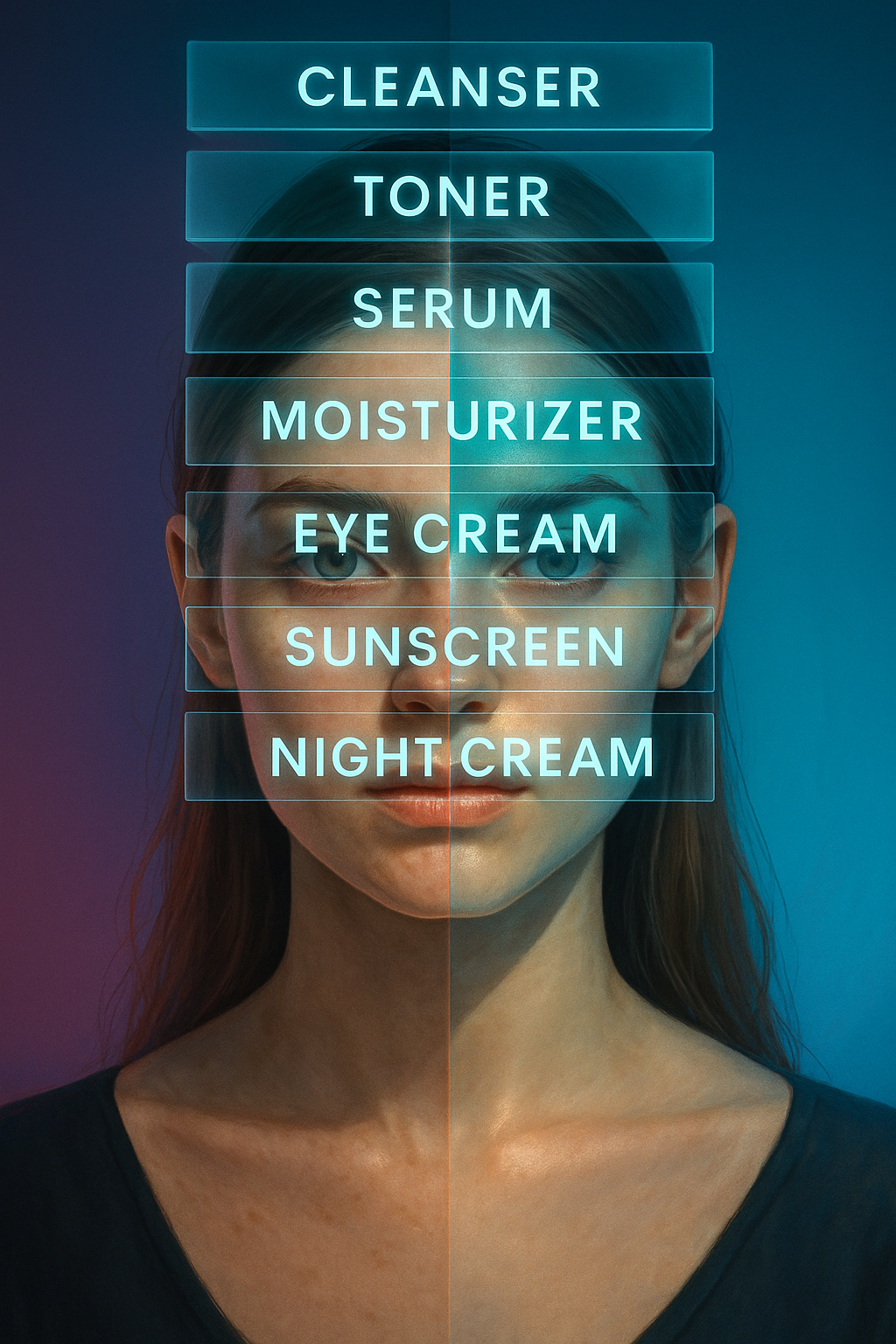
- Try a fragrance-free, ophthalmologist-tested eye cream instead of petroleum jelly. A dedicated eye cream formulated for sensitive skin can offer a similar protective, hydrating effect with a lighter, less greasy texture.
- Apply tretinoin to a fully dry face, and apply the barrier before the retinoid, not after. The AAD notes that applying retinoids to damp skin can increase irritation, so making sure both the barrier product and the retinoid go on clean, dry skin can reduce migration and irritation alike.
- Consider contact lens timing. Some people find it easier to remove contacts before their nighttime routine entirely, apply retinoid and moisturizer, and let everything absorb for 20–30 minutes before touching the eye area again.
- Cut back frequency if irritation is significant. The NIH and dermatology guidance generally support a “start low, go slow” approach — every other night or every third night — while the skin builds tolerance.
When to loop in a dermatologist
If irritation around the eyes is persistent, painful, or accompanied by swelling, that’s worth discussing with a dermatologist — they may recommend a different retinoid formulation, a lower concentration, or a modified routine. Everyone’s skin responds differently, and what works well for one person’s routine may need tweaking for another.
This article is for general educational purposes and is not a substitute for personalized advice from a dermatologist or healthcare provider, particularly if you experience ongoing irritation.
— Gemifys