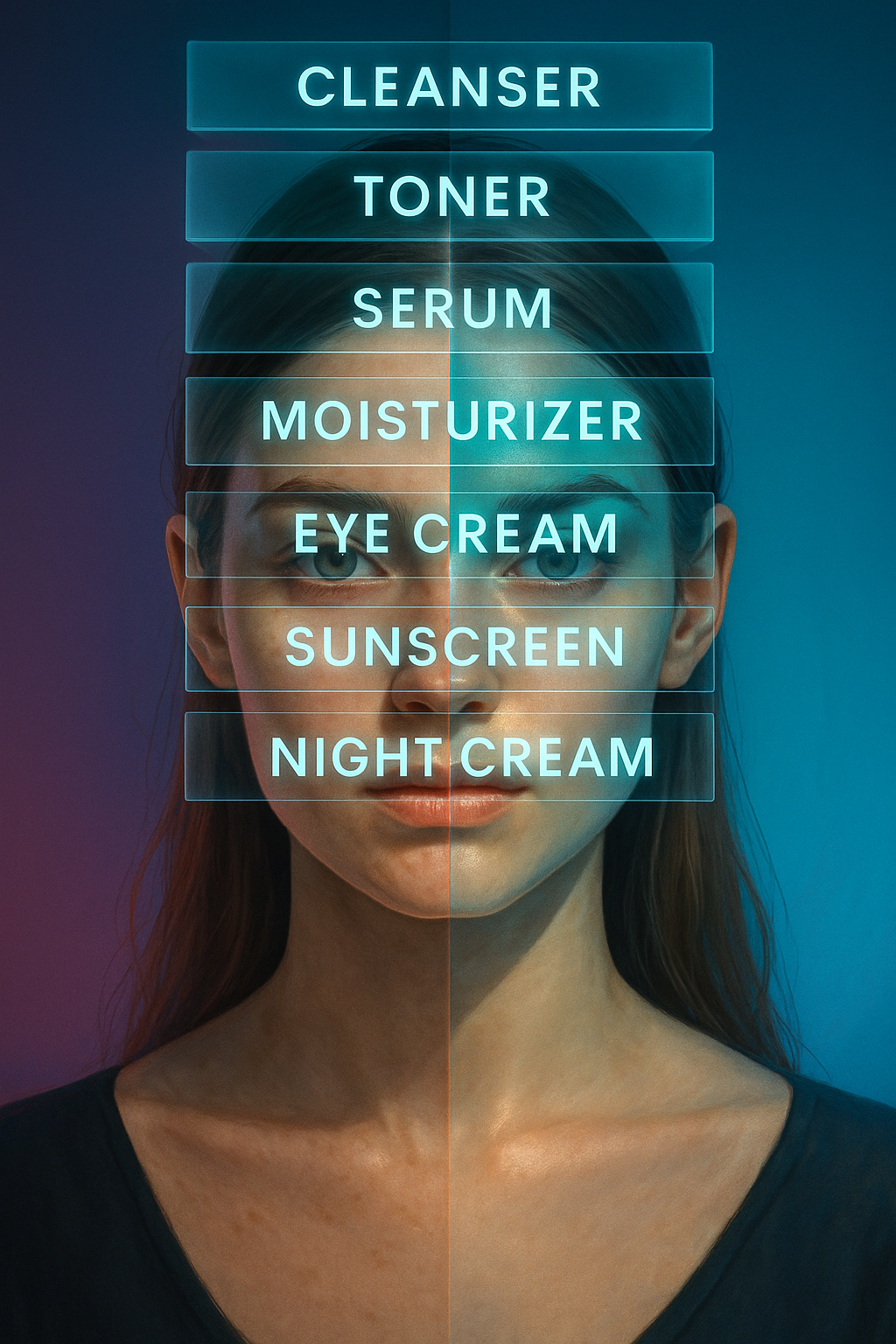

Peeling and flaking around the chin and brows is one of the most common early experiences with tretinoin, especially in the first couple of months as your skin adjusts — a process dermatologists often call “retinization.” The instinct to reach for an exfoliant to speed things along is understandable, but it’s usually the opposite of what dry, adjusting skin needs.
Why tretinoin causes peeling in the first place
Tretinoin works by increasing skin cell turnover, which is exactly what makes it effective for acne and texture over time — but that faster turnover is also what produces the flaking, dryness, and sensitivity many people experience while their skin adapts. The American Academy of Dermatology notes that retinoid-related dryness and peeling are common, especially in the first few weeks, and typically ease as the skin barrier adjusts.
Why adding an exfoliant usually backfires here
Physical or chemical exfoliants (scrubs, AHAs, BHAs) work by removing surface skin cells — which is essentially the same mechanism tretinoin is already driving, just through a different route. Layering an exfoliant on top of retinization can compound irritation, strip an already-compromised skin barrier further, and paradoxically increase redness and sensitivity rather than resolve it. This is especially worth being cautious about given your recent Accutane history, since skin coming off isotretinoin can already have a thinner, more reactive barrier than usual.
The more common dermatology guidance for retinoid-related flaking is the opposite approach: simplify the routine, focus on gentle hydration, and let the skin’s natural cell turnover clear the visible flaking rather than manually sloughing it off. A fragrance-free, ceramide-containing moisturizer applied generously (and reapplied if skin feels tight) is typically the more supportive move than adding another active ingredient.
What tends to help during the adjustment period
A few things dermatology sources commonly point to for easing retinoid-related peeling: moisturizing both morning and night rather than only when skin feels dry, applying a barrier-supportive moisturizer over tretinoin (“buffering”) or waiting longer before application if irritation is significant, avoiding other actives (exfoliating acids, harsh cleansers, additional retinoids) while the skin adjusts, and using a broad-spectrum SPF daily, since retinoid-treated skin can be more sensitive to sun exposure — something you’re clearly already doing well.
If peeling is severe, doesn’t improve after several weeks, or comes with significant redness, burning, or swelling, that’s a good reason to check in with a dermatologist rather than adjusting the routine further on your own, particularly given a recent isotretinoin course. A dermatologist can also advise on frequency (how many nights per week) if the current pace isn’t a good fit for your skin right now.
This article is for general educational purposes and is not a substitute for professional dermatological advice. Please consult a dermatologist about your specific skin care routine, especially with a recent isotretinoin history.
— Gemifys