Starting tretinoin often comes with a side effect a lot of people don’t expect: skin that suddenly seems to sunburn faster, sting more easily, and react to products it used to tolerate just fine. If you’ve found yourself standing in the sunscreen aisle wondering why your old favorite suddenly leaves your face red and stinging, you’re not imagining it — and you’re also not out of options.
Why tretinoin makes skin more sun-sensitive
Tretinoin speeds up skin cell turnover, which is exactly what makes it effective for acne and fine lines — but it also means the outermost layer of skin is thinner and less able to buffer irritants, including UV light. According to Mayo Clinic’s drug information on topical tretinoin, increased sensitivity to sunlight is a well-documented effect, and clinicians generally advise minimizing sun exposure and using sun protection while on it. The American Academy of Dermatology (AAD) similarly notes that daily broad-spectrum sunscreen is considered a non-negotiable part of any retinoid routine, not an optional add-on.
Why “sensitive skin” sunscreens can still burn
Mineral (zinc oxide/titanium dioxide) formulas are usually the first recommendation for reactive, tretinoin-treated skin because they sit on top of the skin rather than absorbing into it. But “mineral” isn’t automatically synonymous with “gentle” — fragrance, certain preservatives, essential oils, and even some emulsifiers used to make mineral formulas feel less chalky can still trigger stinging on a compromised skin barrier. If a product burns on contact, that’s useful information, not something to push through.
A few practical starting points
- Look at the full ingredient list, not just “mineral” on the front label. Fragrance (including “parfum” and some “natural fragrance” blends) is one of the most common irritant culprits in otherwise mineral-based formulas.
- Patch test before committing to full-face use. A small amount on the inner forearm or jaw for a couple of days can save a week of a burning face.
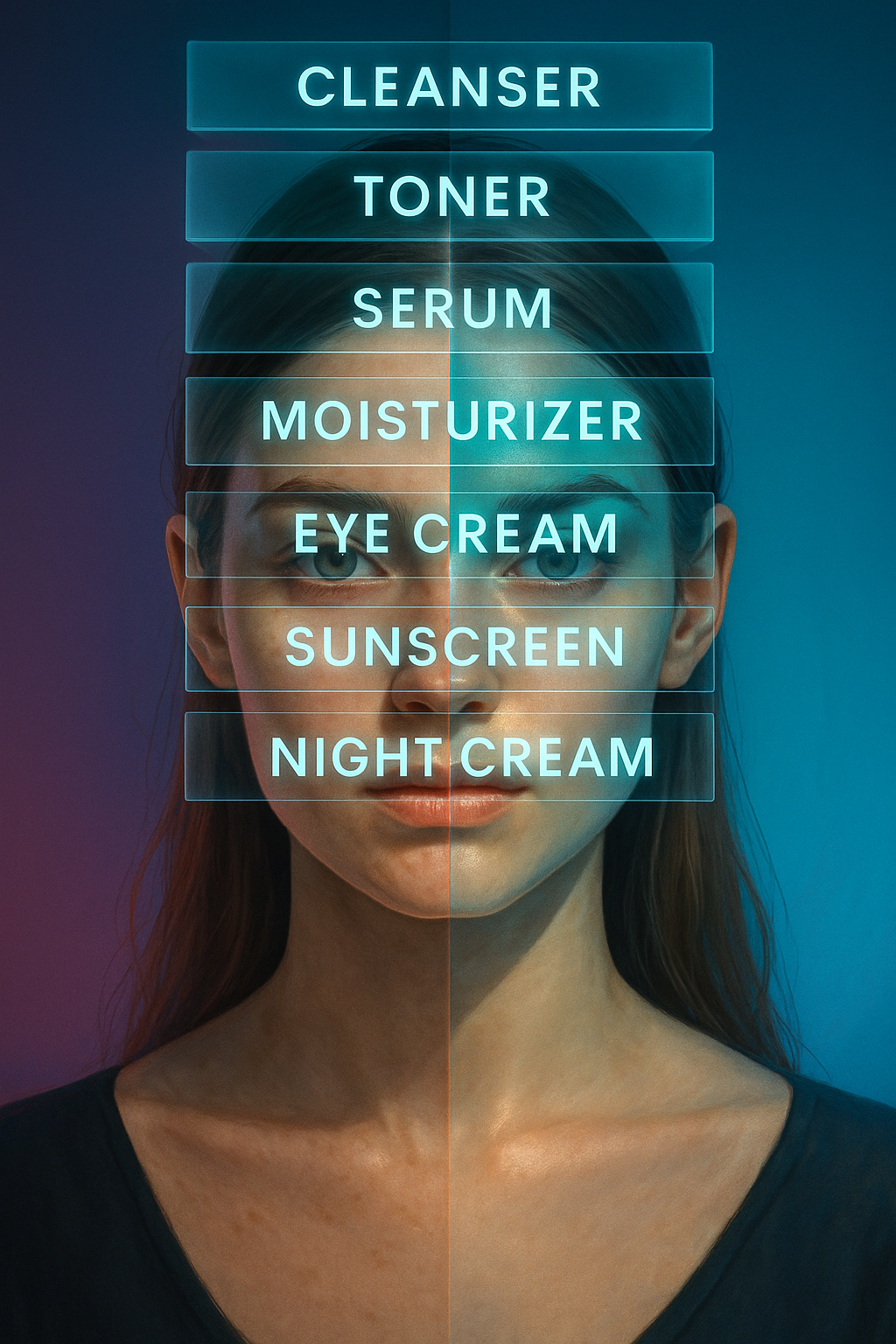
- Let tretinoin and sunscreen do separate jobs, in the right order. The AAD’s general skin care guidance recommends applying sunscreen as the last step of a morning routine, over moisturizer, and reapplying if you’ll be outside for extended periods.
- Consider timing. Many dermatologists suggest applying tretinoin at night and reserving mornings purely for barrier support (a gentle moisturizer) and sun protection, which can reduce how much irritation stacks up during daylight hours.
- Give a new formula more than one day. Some initial tingling on freshly retinized skin can settle within a week; a reaction that gets worse, or that includes hives, swelling, or blistering, is a sign to stop and check with a dermatologist rather than “tough it out.”
When to loop in a dermatologist
If sun sensitivity is severe, if every sunscreen you try seems to burn, or if you’re also managing fungal acne (FA)-prone skin on top of retinoid use — which narrows the safe ingredient list even further, since many sunscreen bases contain oils and esters that can feed malassezia — that’s a good reason to bring the specific products you’ve tried to a dermatology visit rather than continuing to self-experiment. A prescriber can also confirm whether the irritation is from the sunscreen, the tretinoin, or an interaction between the two — something that’s genuinely hard to untangle from the outside.
This article is for general educational purposes and is not a substitute for personalized medical or dermatological advice. If you’re experiencing a persistent skin reaction, talk to a board-certified dermatologist about your specific skin and product routine.
— Gemifys