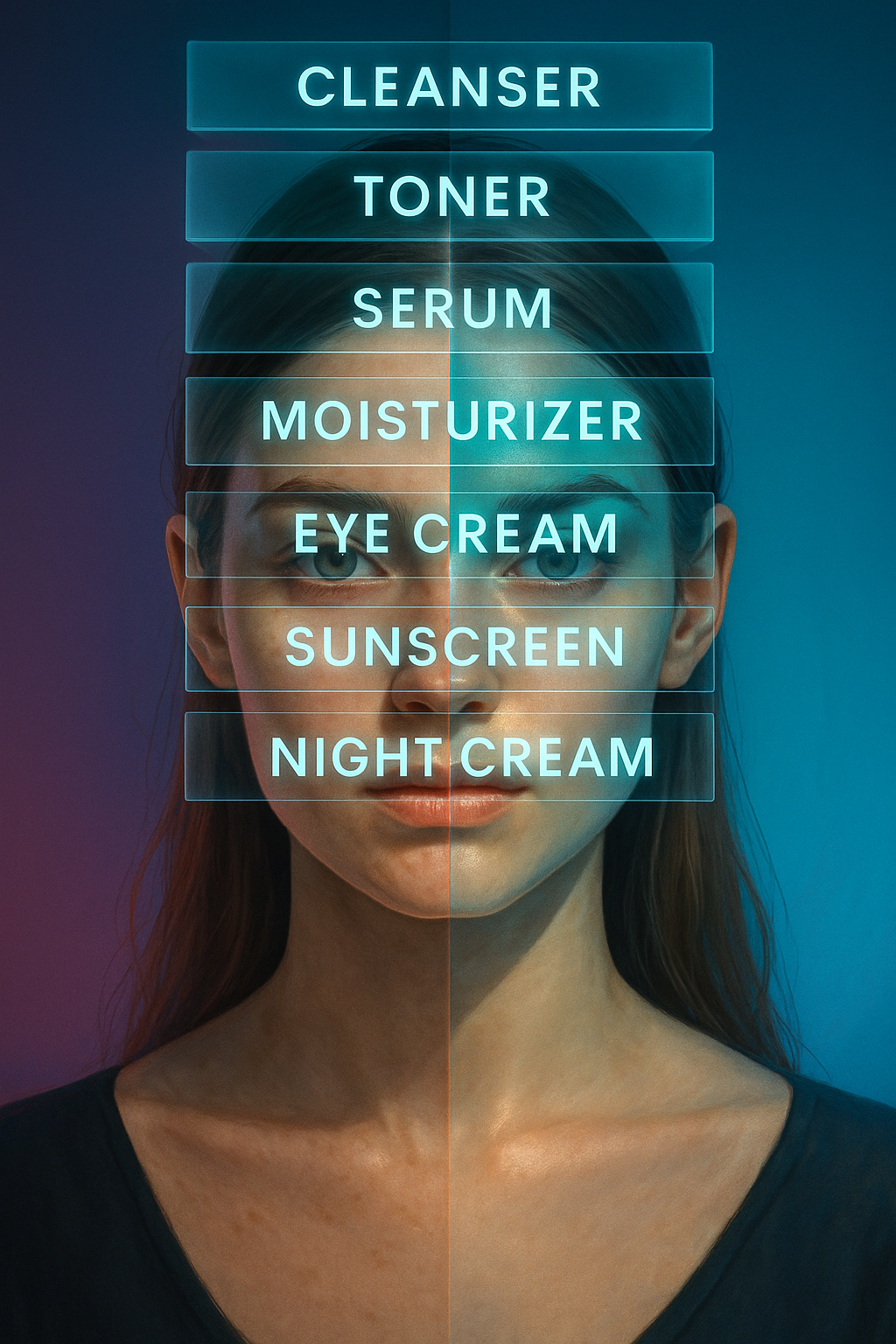

Switching between retinoids — for example, from tazarotene to tretinoin, or moving up in tretinoin strength — is one of the most common reasons people suddenly develop redness, flaking, or a burning sensation after months of a stable routine. This kind of reaction, often called “retinization” or a compromised skin barrier, is a well-documented part of retinoid use and usually manageable with a few adjustments.
Why switching retinoids can trigger irritation
Different retinoids bind to skin receptors with different strength and speed. Tazarotene is generally considered more potent than tretinoin, but individual skin doesn’t always respond predictably — some people find tretinoin more irritating precisely because their skin barrier is already sensitized from a prior product. According to the American Academy of Dermatology (AAD), redness, peeling, and dryness are expected side effects when starting or changing retinoid strength, and typically improve as the skin adjusts over several weeks.
Signs of a compromised skin barrier
Per dermatology guidance summarized by the Cleveland Clinic, common signs include persistent redness, a tight or stinging feeling (especially after cleansing), visible flaking, and sensitivity to products that never used to bother you. If moisturizer stings on application, that’s often a sign the barrier needs recovery time before retinoid use resumes.
What generally helps
- Reduce frequency, not necessarily potency: Many dermatologists suggest applying every other night, or even twice a week, until redness settles, rather than switching products again.
- Buffer with moisturizer: Applying a fragrance-free moisturizer before or mixed with the retinoid (“sandwich method”) can reduce irritation while still allowing some active ingredient penetration.
- Simplify everything else: Dropping other actives (exfoliating acids, benzoyl peroxide, high-strength vitamin C) temporarily gives the barrier fewer things to react to at once.
- Sun protection is non-negotiable: Retinized skin is more sensitive to UV exposure. The AAD recommends daily broad-spectrum SPF regardless of retinoid use, but it matters even more during an irritation flare.
When it’s more than typical retinization
Some redness and peeling is expected; a rash that spreads beyond the application area, swelling, blistering, or symptoms that don’t improve after a week or two of reduced frequency are reasons to check in with a dermatologist rather than continuing to self-adjust. A licensed provider can also help distinguish irritant contact dermatitis from an allergic reaction, which look similar but are managed differently.
This article is for general educational purposes and is not a substitute for personalized advice from a board-certified dermatologist. If irritation is severe, spreading, or not improving, please consult a dermatology professional about your specific skin and product regimen.
— Gemifys