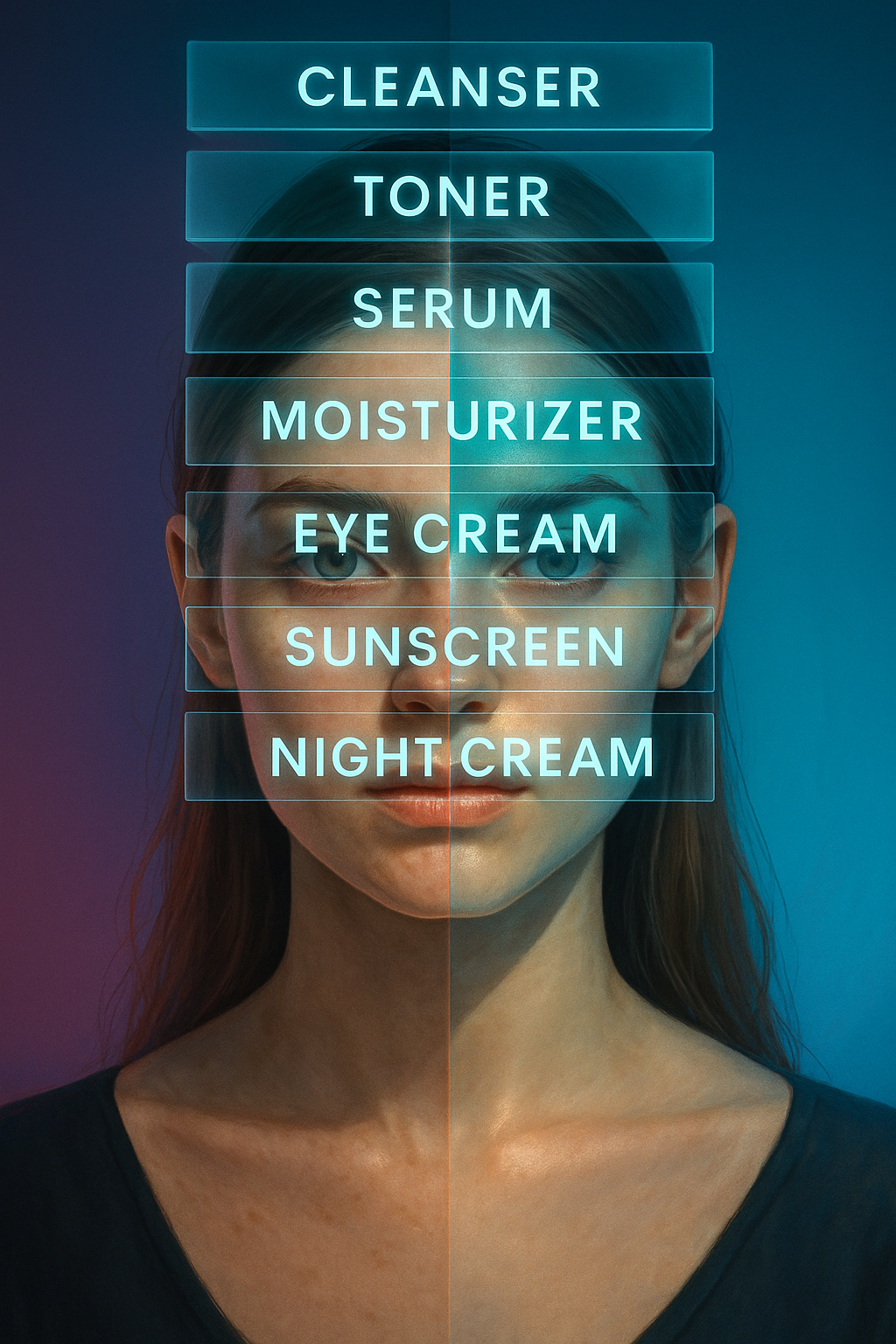

If your skin has gone from a little dry to red, stinging, and shiny-tight since starting tretinoin, you’re not imagining it — and you’re not alone. A common question among tretinoin users is how to tell ordinary “purging” and adjustment irritation apart from a genuinely compromised skin barrier, and what to actually do about it.
Purging vs. irritant contact dermatitis: two different things
Tretinoin, a prescription-strength retinoid, speeds up skin cell turnover. In the first several weeks, this can bring underlying microcomedones to the surface faster than usual — a temporary process often called “purging,” which typically resolves within about 4 to 6 weeks as the skin adjusts (American Academy of Dermatology).
Separately, retinoids can also cause straightforward irritant contact dermatitis — redness, peeling, burning, and a tight or “sunburned” feeling — simply because the skin barrier’s outermost layer is being disrupted while it adapts. This is sometimes called “retinization” or, informally, the “retinoid reaction,” and it’s distinct from purging: it tends to show up as diffuse irritation rather than new breakouts in typical acne-prone areas (National Institutes of Health / PMC).
A rough rule of thumb some dermatology resources point to: purging tends to produce breakouts in places you normally get them, and clears up faster than a full skin cycle. Barrier irritation tends to show up as general redness, flaking, and sensitivity — sometimes in areas that don’t usually break out — and can drag on or worsen if the retinoid routine isn’t adjusted.
Signs your barrier may actually be compromised
According to the Cleveland Clinic, a damaged skin barrier can present as persistent redness, a tight or stinging sensation (especially after cleansing), flaking that doesn’t improve, increased sensitivity to products that never used to bother you, and skin that looks shiny or feels rough to the touch. If several of these are present together and aren’t easing up after a few weeks, it may be a sign that tretinoin was introduced too quickly for your skin’s current tolerance, rather than a normal adjustment phase.
What may help — and what dermatology sources generally recommend
- Slow down frequency. Many dermatology resources suggest starting retinoids at 2–3 nights a week rather than nightly, and increasing gradually only once skin tolerates the current frequency (AAD).
- “Buffering.” Applying a gentle, fragrance-free moisturizer before tretinoin can dilute its intensity somewhat and may reduce irritation for sensitive skin.
- Simplify the rest of the routine. Dropping other actives (exfoliating acids, other retinoids, harsh cleansers) while the skin recovers is a commonly recommended step, per the Mayo Clinic.
- Moisturize generously and use SPF daily. Retinoids increase sun sensitivity, and a compromised barrier needs consistent, bland moisturization to recover (Mayo Clinic; AAD).
- Give it real time — but not indefinitely. A few weeks of adjustment is typical. Irritation that’s severe, that isn’t improving after a month of scaling back, or that comes with significant pain, swelling, or oozing is a reason to check in with a dermatologist rather than push through.
This article is for general educational purposes and isn’t a substitute for individualized medical advice. If you’re unsure whether what you’re experiencing is normal adjustment or something that needs attention, or if irritation is severe or persistent, it’s best to check in with a board-certified dermatologist who can look at your skin directly.