By Gemifys
If you’ve ever felt like you’re stuck choosing between flaky, irritated skin and a fresh crop of breakouts while using tretinoin, you’re not imagining things — and you’re definitely not alone. It’s one of the most common frustrations people report during the early months (and sometimes well beyond) of retinoid use: dial the strength or frequency up enough to see results, and your skin barrier protests with dryness and peeling; back off to protect the barrier, and blemishes creep back in.
Why this loop happens
Tretinoin (and other retinoids) work by speeding up skin cell turnover, which is exactly what helps unclog pores and fade discoloration over time — but that same mechanism can temporarily disrupt the skin barrier, leading to dryness, redness, and increased sensitivity, especially in the first few months of use. According to the American Academy of Dermatology, this adjustment period (“retinization”) is common and typically improves as the skin builds tolerance, though the timeline varies widely from person to person.
What often keeps people stuck in the loop is treating dryness and breakouts as two separate problems to be solved in opposite directions, rather than recognizing that an over-compromised moisture barrier can actually make skin more reactive and breakout-prone — not less.
Approaches that may help
- Consider a slower reintroduction schedule. Rather than alternating strengths across different areas of the face indefinitely, some dermatologists suggest a uniform “start low, go slow” approach — using a lower concentration a few nights a week and gradually increasing frequency as tolerance builds, per guidance summarized by the Cleveland Clinic.
- The “moisturizer sandwich” technique. Applying a gentle, fragrance-free moisturizer before and after tretinoin can buffer its effects on sensitive areas without eliminating efficacy, a strategy commonly recommended by dermatology sources for reducing irritation.
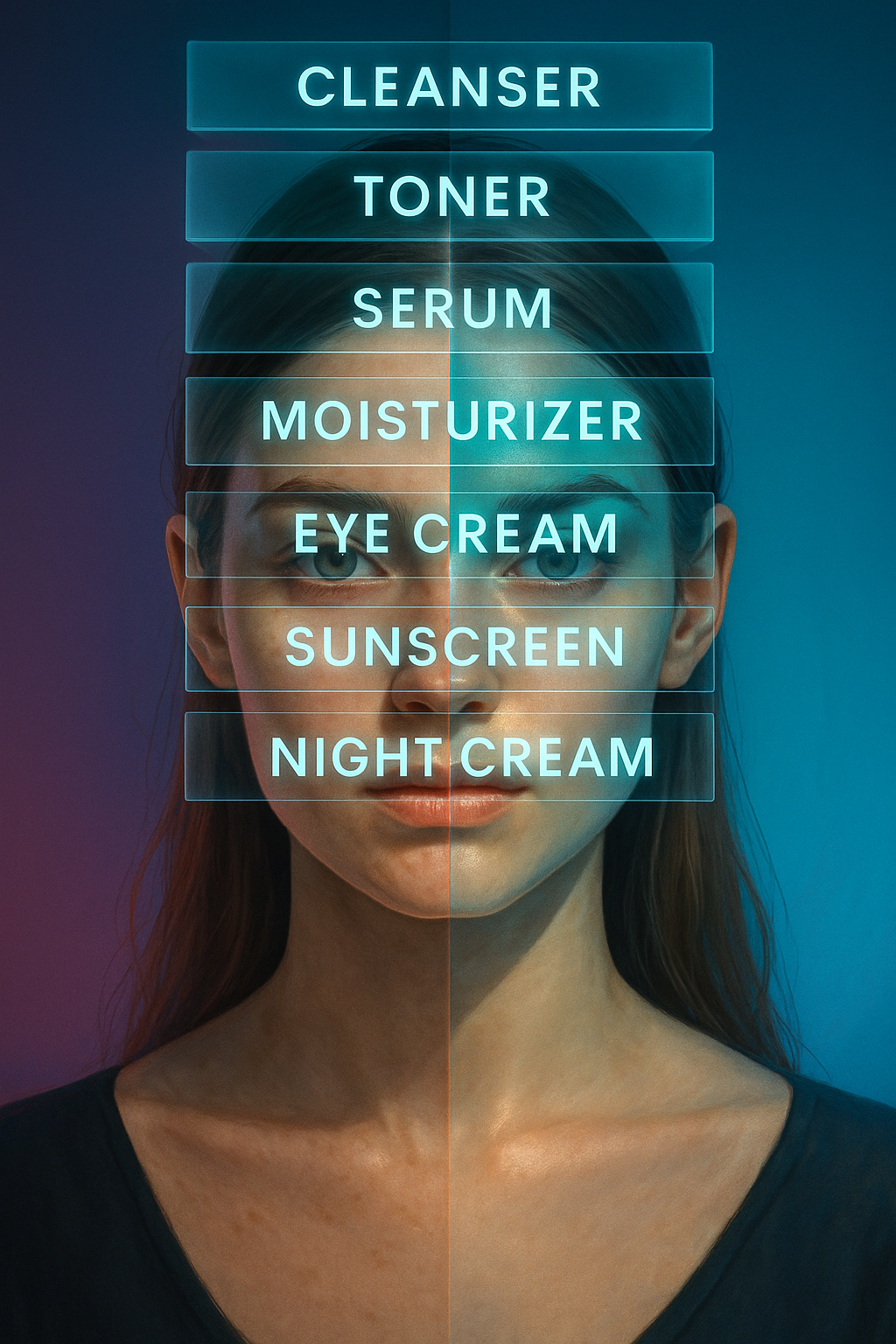
- Simplify the rest of your routine. Layering multiple actives (exfoliating acids, other acne treatments) alongside retinoids can compound irritation. The AAD’s retinoid care guide notes that a minimalist routine during the adjustment phase often supports better tolerance.
- Give it real time. Visible improvement in acne and texture from retinoids often takes 8–12 weeks or longer of consistent use, according to clinical literature on topical retinoid use — which can make the dryness-vs-breakouts cycle feel worse before it gets better.
When to bring in a professional
If irritation is severe, persistent, or you’re unsure whether what you’re seeing is a normal purge versus a reaction that calls for a different approach, it’s worth checking in with a board-certified dermatologist. They can assess your skin directly and may recommend a different retinoid formulation, strength, or an adjusted routine tailored to your skin type — something general guidance online can’t fully replace. This article is for general educational purposes and isn’t a substitute for personalized medical or dermatological advice.