

Updated for 2026. If you’ve been scrolling through skincare social media or browsing beauty aisles lately, you’ve probably noticed niacinamide appearing everywhere. Unlike many trending skincare ingredients that come and go, niacinamide has earned its reputation through decades of actual research — though not every number attached to it online holds up to scrutiny, which is worth sorting out before you build a routine around it.
This guide covers what niacinamide is, what the real clinical research actually supports (and at what concentrations), and how to use it well — without repeating the inflated, unsourced statistics that circulate around this ingredient.
What Is Niacinamide? The Basics
Niacinamide, also known as nicotinamide, is the active form of vitamin B3 (niacin). Unlike niacin itself, which can cause uncomfortable flushing at high oral doses, topical niacinamide is generally gentle and well tolerated across most skin types, including sensitive skin. It is water-soluble, pH-neutral, formulation-stable, and pairs well with other common actives, including retinol and vitamin C — the old myth that niacinamide and vitamin C cancel each other out has been fairly well debunked; the two are commonly formulated together without issue.
What the Actual Clinical Research Supports
A lot of skincare content attaches very precise numbers to niacinamide — “reduces pores by 23%,” “boosts collagen by 54%” — without citing a real source. Here is what the genuinely cited research shows instead:
- Sebum and pore appearance (2% concentration). A randomized controlled trial found significant reductions in sebum excretion rate and visible pore size after four weeks of consistent use at just 2% niacinamide. Notably, there is no strong clinical evidence that going above that concentration produces proportionally greater sebum reduction — more is not simply better here.
- Skin barrier function (2% concentration). The same class of trial found that 2% topical niacinamide, applied for four weeks, significantly increased stratum corneum ceramide levels and reduced transepidermal water loss in participants with dry skin — a real, measurable barrier-support effect at a low, well-tolerated concentration.
- Fine lines, texture, and tone (4–5% concentration). The landmark Bissett et al. 2004 study, a 12-week trial in 50 women aged 40 to 60, found improvements across six skin parameters: fine lines and wrinkles, texture, hyperpigmentation spots, redness, sallowness, and elasticity, using a 4–5% niacinamide formulation.
- Hyperpigmentation, compared directly against a known treatment. A trial comparing 4% niacinamide against 4% hydroquinone (a standard reference treatment) for melasma over eight weeks found roughly a 40% response rate among participants — a real, comparative result, though notably not a claim that niacinamide outperforms hydroquinone, just that it showed a meaningful response as an alternative.
- Higher concentrations (10%+). There is no published, peer-reviewed, double-blind trial demonstrating that 10% niacinamide outperforms 5% for common claims like fine lines, hyperpigmentation, or sebum control. Products marketed at 10% or higher are not necessarily more effective — and higher concentrations do increase the odds of irritation for some users.
How to Use It Well
Choosing a Concentration
Based on the research above, 2% is genuinely sufficient for sebum and barrier support, and 4–5% is the concentration with the strongest evidence behind broader anti-aging and tone benefits. Starting at 2–5% and staying there, rather than chasing higher percentages, is well supported by the actual data.
Application Order
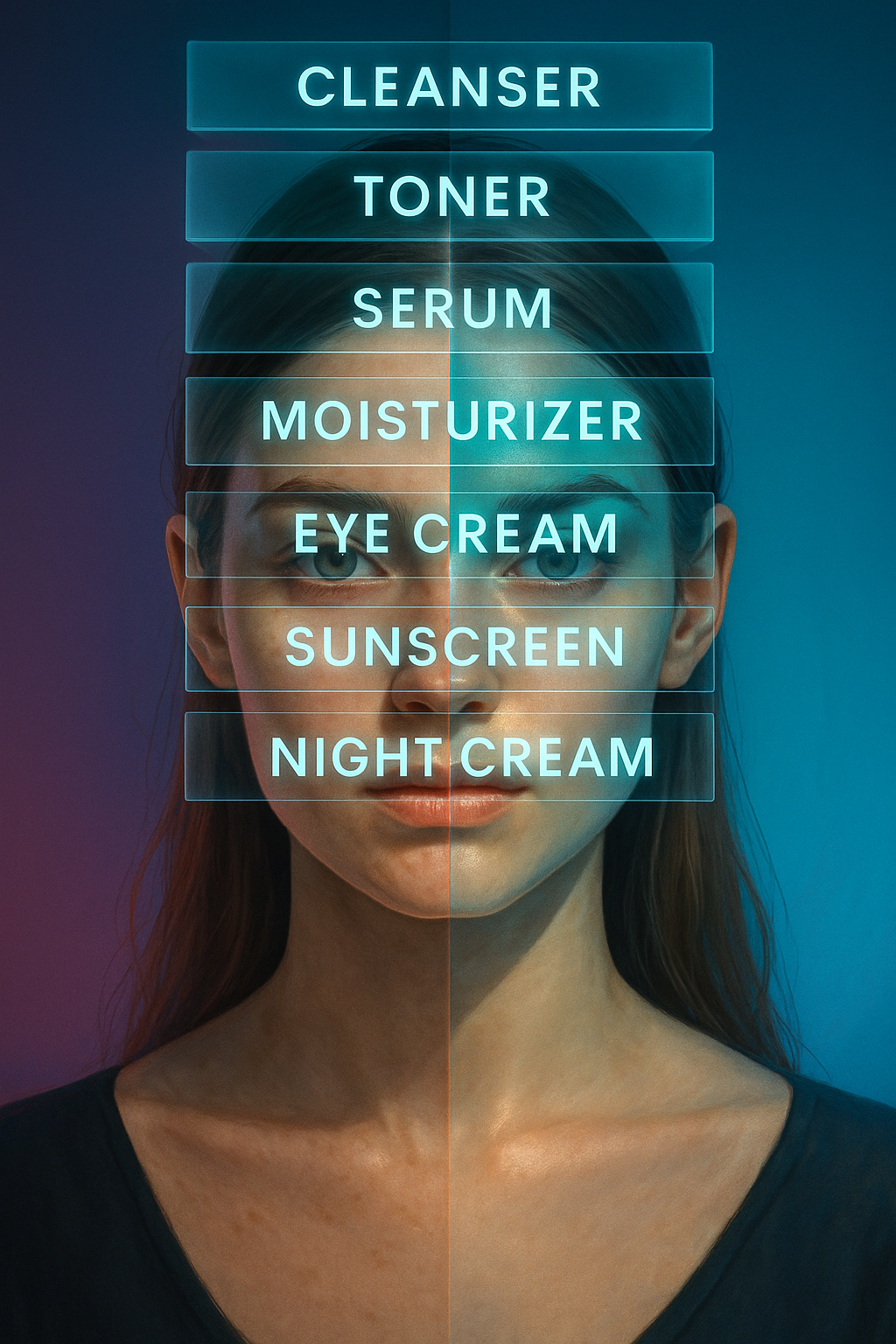
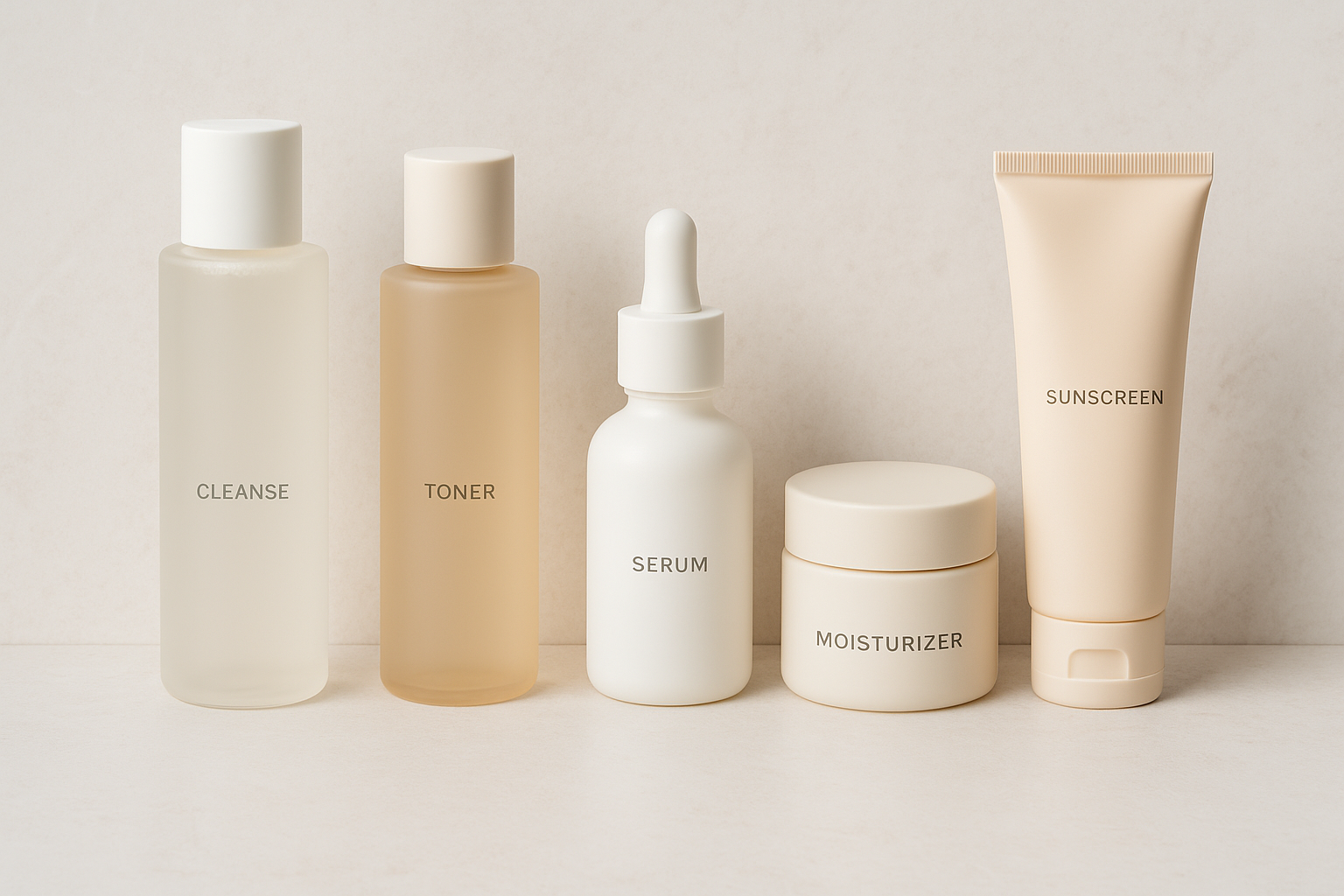
- Cleanse.
- Apply niacinamide serum to slightly damp skin.
- Wait a few minutes for absorption.
- Follow with moisturizer.
- Apply sunscreen (morning routine only).
Timing and Consistency
Niacinamide can reasonably be used morning and evening, once daily to start if you have sensitive skin. Based on the trial durations above, meaningful results are typically a four-week story for sebum and barrier effects, and a twelve-week story for tone and texture improvements — shorter timelines advertised elsewhere are not well supported by the studies actually behind this ingredient.
What Pairs Well, and What to Use With Caution
Niacinamide combines well with hyaluronic acid, retinol (it can genuinely help offset retinol-related irritation for some users), vitamin C, and most gentle actives. Combining it with high-concentration exfoliating acids or benzoyl peroxide is where caution is warranted — not because the combination is dangerous, but because layering multiple actives raises the odds of irritation, and benzoyl peroxide in particular can reduce niacinamide’s stability in some formulations.
Who It Suits, and Who Should Be Cautious
Niacinamide suits most skin types reasonably well, including oily, combination, and sensitive skin, given how gentle it is relative to most active ingredients. Genuine sensitivity to it is uncommon but does happen; anyone introducing several new actives at once, or working with an already-compromised skin barrier, should introduce it gradually rather than all at once, same as with any new active.
Quick FAQ
Is niacinamide worth using if I already use retinol? Yes — the combination is well tolerated for most people, and niacinamide’s barrier-support properties can genuinely help offset some retinol-related dryness and irritation.
Does niacinamide cause purging? No — unlike exfoliating acids or retinoids, niacinamide does not speed cell turnover in a way that causes purging. Breakouts after starting it are more likely a sensitivity reaction or an unrelated coincidence, not purging.
Do I need a 10% or higher formula to see results? Based on the actual trial data above, no — 2–5% is where the real evidence sits, and higher concentrations mainly add irritation risk without clearly added benefit.
Is niacinamide from a serum different from niacinamide in a moisturizer or cleanser? Meaningfully, yes. A cleanser washes off within a minute or two, giving niacinamide almost no real contact time with skin, so any benefit is minimal regardless of the concentration listed on the bottle. A leave-on serum or moisturizer gives the ingredient the contact time the studies above actually used, which is why a leave-on formula is the more evidence-aligned way to use it.
A Note on Reading Skincare Claims Generally
This ingredient is a useful case study for a broader habit worth building: an oddly specific, uncited percentage on a product page or social post (“increases collagen by 54%”) is a signal to look for the actual underlying study, not a reason to trust the number automatically. Real dermatological research on skincare ingredients does exist and is often genuinely positive, as it is here — it just rarely matches the most dramatic-sounding numbers that circulate once a marketing team gets involved.
Final Thoughts
Niacinamide holds up well under real scrutiny — the genuine, cited research supports sebum control and barrier support at 2%, and broader anti-aging and tone benefits at 4–5%, over four to twelve weeks of consistent use. The inflated, uncited percentages that circulate around this ingredient online are not necessary to make the case for it; the real data is solid on its own.
For more evidence-checked skincare ingredient breakdowns, visit the Skincare section at gemifys.com.